In brief
Concerns are abundant regarding the construction of the Yarlung Tsangpo dam, which promises immense energy generation while threatening local communities and ecosystems.
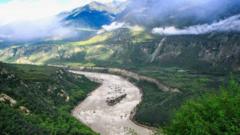
The Chinese government has officially approved the construction of a massive hydropower dam on the Yarlung Tsangpo river in Tibet, projected to be the largest in the world. The development is anticipated to generate three times more energy than the current record-holder, the Three Gorges Dam. While Chinese state media touts the dam as "a safe project that prioritises ecological protection," human rights advocates express deep reservations. They warn that the dam's construction could result in significant community displacement, alter natural habitats, and harm some of the richest ecosystems on the Tibetan Plateau. Activists argue that this development exemplifies Beijing’s historical exploitation of Tibetan land and the suppression of local rights following the region's annexation in the 1950s. Recent protests against hydropower projects in Tibet have been met with brutal crackdowns, highlighting the tense relations between authorities and the Tibetan people. Reports indicate the Yarlung Tsangpo dam will necessitate extensive tunneling and could enhance China's control over cross-border river flows into India and Bangladesh, raising geopolitical tensions. In response to concerns voiced by India, the Chinese government has asserted its rights to develop the river while claiming to consider the environmental impacts.This ambitious project entails significant engineering challenges, taking place in a seismically active region. Experts worry that the construction could increase the likelihood of landslides and other geological hazards. With estimated costs reaching nearly $127 billion, the dam represents both a monumental investment in renewable energy and a flashpoint for regional conflict. As China continues to pursue hydropower development in Tibet, the balance between energy needs and respect for local communities remains critically in question.