In brief
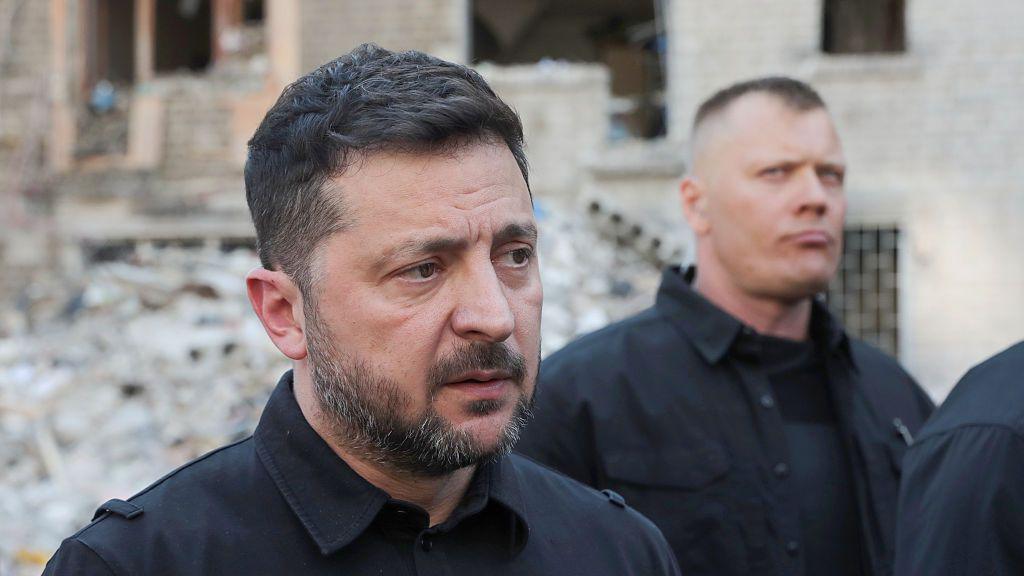
President Volodymyr Zelensky plans to post a plea at the NATO summit in Turkey, after Russia struck Kyiv twice in a week with deadly missiles that destroyed flats and killed dozens. He will meet with Donald Trump, urging a shift in Russian strategy to open negotiations. Zelensky points out the stark shortage of Patriot missiles in Ukraine and calls for allies to release stored systems. Drone strikes on Russian targets are adding pressure, but Kyiv needs more air‑defence to protect its civilians. The summit is seen as a critical window for delivering the assistance Ukraine urgently requires.
President Volodymyr Zelensky is set to use the NATO summit in Ankara as a platform to press Washington, Brussels and other allies for urgently needed air‑defence systems after a wave of Russian missiles struck Kyiv three times in less than a week, destroying residential blocks and killing more than fifty civilians.
The bomb attacks on the Ukrainian capital have been followed by a sharpened counter‑offensive; Ukrainian long‑range drones have hit Russian oil refineries and supply lines, creating fuel shortages and power cuts back home. Zelensky says the attacks show that Ukraine is disrupting the Kremlin’s war effort, but the reverse is also true: the ballistic missiles coming from Russia strike aircraft and infrastructure that are increasingly difficult to intercept.
At the summit, the President will meet with former President Donald Trump, who has been briefed on the crisis and is poised to remind the United States that the fight for Ukraine’s sovereignty must be backed by hardware, not only political support. Zelensky argues that all NATO members with Patriot interceptors should release storage stock‑piles, as the missiles in Ukraine are running short and current reserves are insufficient for the escalating war.
Patriot systems are rare, and even a handful of them will not stop the massed volleys of Russia’s 50–70‑kilometer high‑speed ballistic missiles that can deliver their payload at a range of several hundred kilometres. Ukraine has therefore called for a joint program to produce its own equivalent “Air‑Defence Interceptor” with NATO assistance.
Zelensky’s plea extends beyond weapons. He wants to use the summit as a chance to show the broader geopolitical costs of the war, pointing to very recent hits on a Siberian oil refinery in Omsk that were carried out by Ukrainian drones. Crimea remains under a constant assault, showing the reach of Ukraine’s modern warfare, and Putin’s claim to “save” Russia from economic chaos is being challenged by rocket‑driven power outages and food shortages reported across the countryside.
If the NATO allies can put more interceptors on the frontline, Ukrainian cities could be better shielded from Russia’s artillery and air strikes. That would allow Kyiv to keep up a harder strike campaign, drag Russia into a strategic standing‑off and push the Kremlin toward negotiated peace conditions that are more favourable to Ukraine’s people and its territory.
The graphic shows that ballistic missiles follow high arcs and descend quickly; cruise missiles fly low but still need jet engines; drones move slowly and can be deployed in large numbers. Their combination explains the difficulty Ukraine’s air defence has in intercepting every incoming threat, especially when only a handful of Patriot batteries exist.