In brief
Ukrainian drones have targeted two Wildberries logistics hubs in Russia’s south‑west during the early hours of July 22, setting warehouses on fire and injuring 15 people. According to Wildberries founder Tatyana Kim and regional governors, the attacks come after similar strikes on the company’s facilities in Tambov and Elektrostal in the previous days. The attacks are part of Ukraine’s strategy to disrupt Russia’s supply chain and support Ukraine’s war effort, according to U.S.Coordinator Serhii Kuzan. The incidents demonstrate the growing danger for civilians as the war escalates.
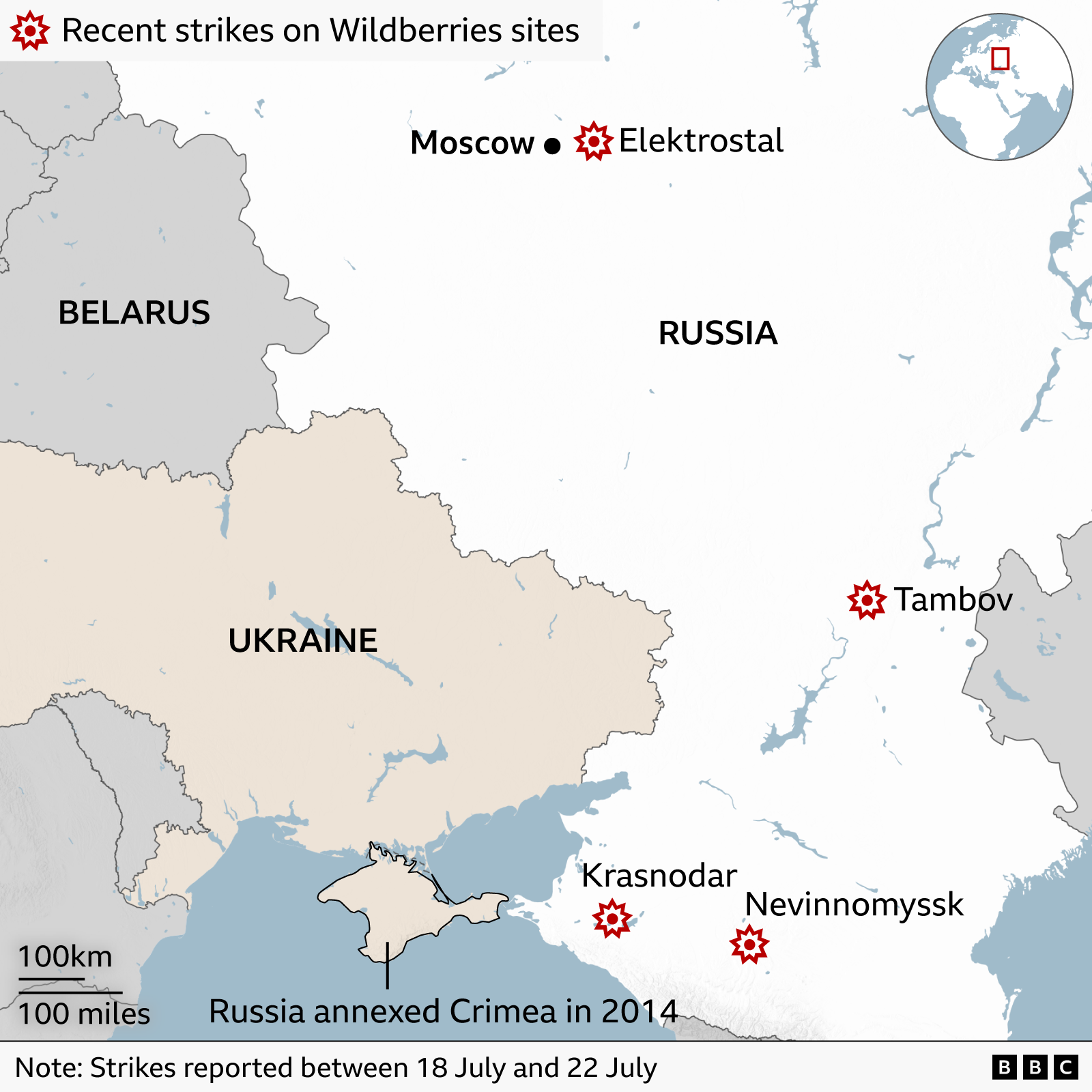
In the early hours of July 22, Ukrainian drones struck logistics hubs owned by Russia’s biggest online retailer, Wild Berries, causing fires in Krasnodar and Nevinnomyssk and injuring 15 people.
The founder of Wild Berries, Tatyana Kim, announced on Telegram that workers had been evacuated from the warehouses after the strikes and that the attacks were part of Ukraine’s plan to hit Russian logistics droplets used to supply the army with drone components and navigation equipment.
Krasnodar’s governor, Veniamin Kondratyev, reported that 10 workers were injured in the attack and that three were in serious condition. Nevinnomyssk’s governor, Vladimir Vladimirov, said five people were hurt with everyone later receiving outpatient treatment.
This attack marks the second time Wild Berries’ facilities were hit in less than a week. Earlier this month, warehouses in Tambov and Elektrostal were struck, killing eight people.
BBC Verify confirmed that video footage captured the fires at both sites. Officials also said air defences were activated in Nevinnomyssk as the attacks began just after 00:00 GMT.
Wild Berries operates as a marketplace connecting independent sellers with buyers across Russia and handling payments, similar to Amazon and Ozon. The strikes have harmed hundreds of sellers dependent on the platform for their livelihoods.
Serhii Kuzan, chairman of the Ukrainian Security and Cooperation Centre, explained that the objective of targeting Wild Berries is to disrupt the delivery of dual‑use electronics and other sanctioned goods to the Russian army, thereby causing both economic and psychological damage.
In addition to the warehouse attacks, Krasnodar’s governor also reported that a drone fragment hit an oil depot and caused a fire, while snippets of drone debris were found on company grounds in Armavir and the village of Dinskaya. The governor said there were no injuries from these events.
The Ukrainian presidential statement noted that Ukrainian strikes had targeted an oil depot, a tanker, and four cargo ships of Russia’s “shadow fleet” operating in the Sea of Azov and the Black Sea, part of a broader strategy to bypass international sanctions on Russian oil exports.
Images and satellite photos of the damaged warehouses appear around the world, showing large fires and columns of smoke. A dramatic photograph shows a lorry with “Wild Berries” written on the side of the vehicle, underscoring the visibility of the company's logistics network.
With the conflict intensifying, the wave of drone strikes on infrastructure is escalating, making everyday locations far more dangerous and highlighting the war’s impact on civilian life and global supply chains.