In brief
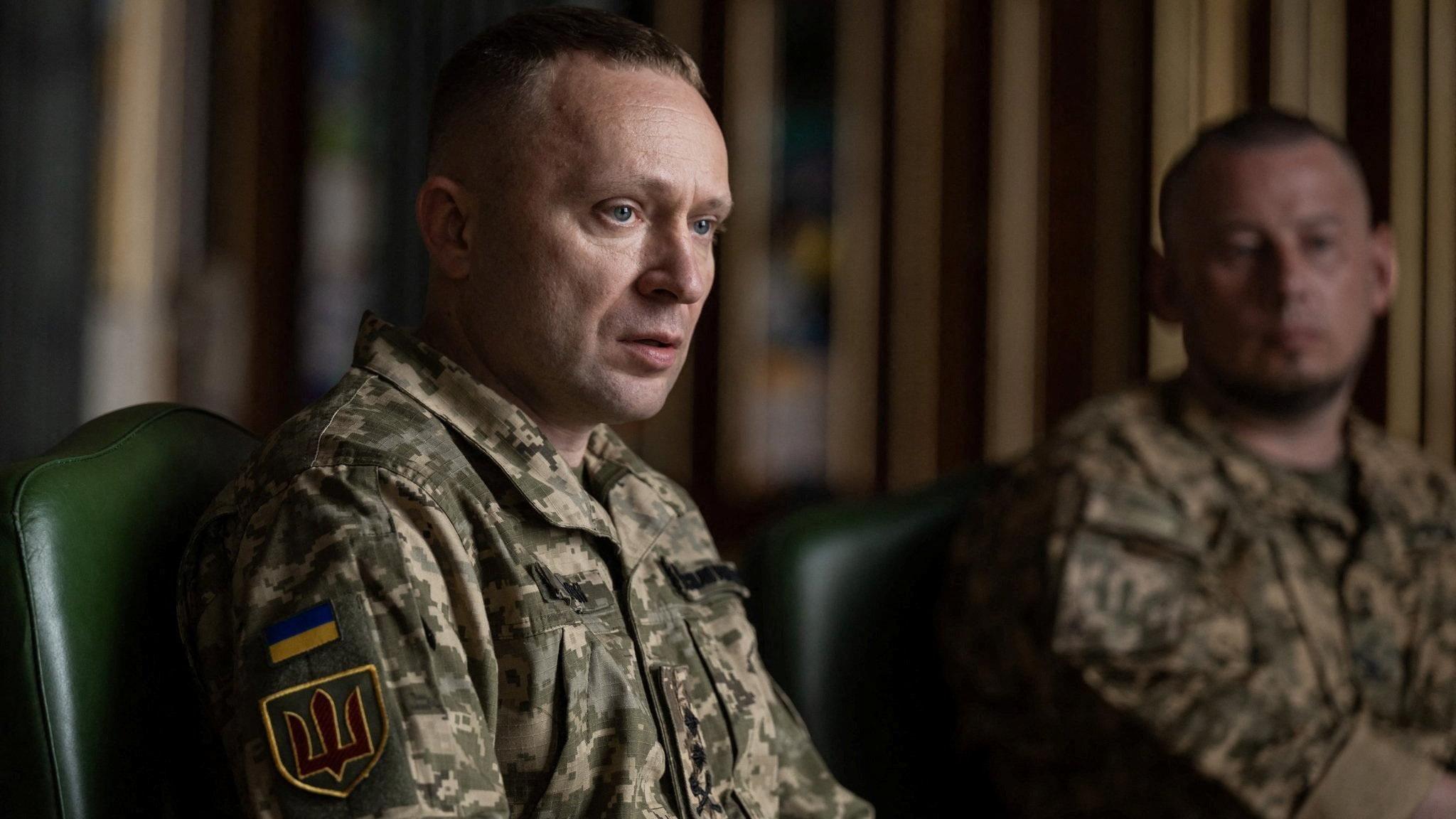
Maj‑Gen Mykhailo Drapatyi, 43, has been appointed Ukraine’s new commander‑in‑chief, succeeding Oleksandr Syrskyi. The move comes amid civilian and military support, with Drapatyi hailed for his humane leadership and battlefield success. His past roles include leading joint forces and task forces that pushed back Russian advances. While the new commander will face tough constraints, he aims to tackle corruption, improve conscription practices and harness Ukraine’s tech‑driven defense successes.
Who is Mykhailo Drapatyi, Ukraine’s new commander‑in‑chief?
Maj‑Gen Mykhailo Drapatyi, 43, has replaced Oleksandr Syrskyi as Ukraine’s commander‑in‑chief – the third since Russia’s full‑scale invasion in 2022.
His nomination was met with applause from both civil society and the armed forces. Drapatyi’s name surged in protests that began by supporting his friend, former defence minister Mykhailo Fedorov, and ended with demands that Syrskyi be dismissed.
A Ukrainian soldier praised him, saying, “There’s no better person for this position nowadays in Ukraine.”
He is known for his extensive military experience in post‑Soviet Ukraine, his field-command skills, and a reputation as a humane and strong leader.
Drapatyi graduated from the Kharkiv Institute of Tank Troops in 2004 and served as a lieutenant. A decade later, his battalion’s viral footage of an infantry fighting vehicle smashing a barricade during the 2014 Mariupol hostage‑rescue operation marked the start of his prominence.
He later guided Ukrainian units out of a Luhansk bordering encirclement and returned to university in 2021 for advanced operational and strategic training, earning a sword of honour from British Ambassador Melinda Simmons.
When Russia’s invasion erupted in February 2022, Drapatyi was deputy commander of joint forces and directed task forces that reclaimed settlements across Kherson and the Dnipro region.
In 2024, he led land troops and managed intense combat zones. A subsequent missile strike on a Dnipropetrovsk training ground killed 12 soldiers; Drapatyi resigned that day, taking accountability for the mishap.
His resignation was praised as personal responsibility, leading president Zelensky to appoint him commander of the Joint Forces instead.
Rumours of friction with Syrskyi grew louder as Drapatyi’s reputation blossomed. An unnamed officer highlighted his gifting and his frequent deployment to high‑pressure environments.
Now, as Syrskyi has stepped down, the nation Anticipates Drapatyi’s leadership.
Analyst Mykola Bielieskov notes that Drapatyi’s strong military reputation will face constraints imposed by politics, Western support, and supply chains.
He must also focus on mobilising manpower and rooting out corruption that permeates conscription, procurement, and leadership.
Additionally, he is expected to leverage Ukraine’s technology-driven defense sector that has underpinned recent battlefield successes.
In his inaugural message as commander‑in‑chief, Drapatyi acknowledged the challenge, stating, “I will work without making loud promises, with responsibility for our decisions, and with respect for those on the front line.”
Opponents of Syrskyi’s “outsized” approach anticipate a shift to a more humane strategy under Drapatyi’s oversight.
Former interior minister adviser Oleksiy Kopytko warned that the role’s glamour fades quickly: “You are loved today, not loved tomorrow, and may be guilty of everything the next day.”
Valery Zaluzhnyi, former army chief, cautioned that Drapatyi “will have a very difficult time, even harder than he imagines.”
Nonetheless, soldiers and ordinary Ukrainians are excited about the new outlook Drapatyi brings, with one soldier saying that a reinstated defence minister Mykhailo Fedorov and Drapatyi together would be “Russia’s worst nightmare.”
When Drapatyi stepped down in 2025, he outlined a list of reforms: from combat training to unfair mobilisation and flawed procurement systems. He insists that “efforts must be stepped up” and that he will confront similar challenges, now on a national scale.