
In brief
Since early September, the U.S. has conducted airstrikes on drug boats in the Caribbean and eastern Pacific under Operation Southern Spear, involving significant military deployments. While the administration claims these actions are necessary for national security, critics question their legality and the potential for deepening conflict with Venezuela.
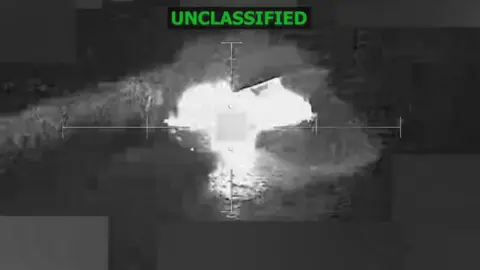
The Trump administration's military operation, referred to as Operation Southern Spear, has seen a series of U.S. airstrikes targeting alleged drug trafficking vessels in the waters off the Caribbean and eastern Pacific since early September. This campaign represents the largest U.S. military mobilization in Latin America in decades, with tens of thousands of troops and advanced naval assets deployed in the region.
Recently, the USS Gerald R. Ford, the world’s largest aircraft carrier, joined the effort in the Caribbean, emphasizing the military's commitment to combat what officials describe as narco-terrorism threatening American lives.
Defense Secretary Pete Hegseth has publicly stated that the operation aims to eradicate narco-terrorists and secure the U.S. from the pervasive flow of illegal narcotics. However, details surrounding the specific targets involved in these strikes have remained vague, with links to the Tren de Aragua gang being mentioned without substantiation.
The military responses have drawn bipartisan scrutiny, as many fear the potential escalation of military conflict with Venezuela could follow. The Trump administration claims the strikes are defensive measures. A confidential note sent to Congress characterizes the operations as necessary to combat unlawful combatants—namely drug cartels—whose actions are deemed an armed attack on the U.S.
In total, the U.S. military has reportedly conducted over 22 strikes against multiple vessels suspected of narcotics smuggling in just over two months. While the administration insists the operations are within the bounds of international law, critics—including international legal experts—warn that the strikes could constitute illegal actions under international law and could thus classify as crimes against humanity.
The rising U.S. military presence has led to heightened tensions with Venezuela's government, which claims the U.S. aims to destabilize its socialist regime. Venezuelan President Nicolás Maduro has mobilized troops in response to what he sees as a provocation, urging for peaceful relations and warning against 'forever wars.'
While the official narrative presents the campaign as a necessary deterrent against drug trafficking, the realities on the ground raise substantial legal and ethical questions about the unfolding U.S. military strategy in a volatile region.

