What on earth has the last fortnight been all about?
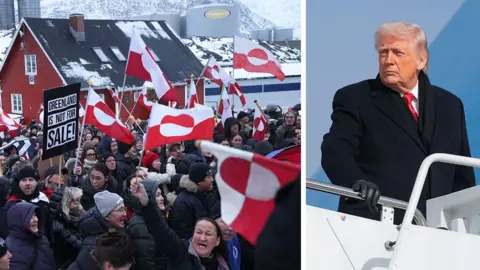
In the wake of a successful military operation in Venezuela earlier this month, a buoyed-up Donald Trump started to ratchet up the rhetoric on Greenland.
Day after day, the world was treated to claims of ownership, threats of military action, and tariffs against traditional allies in Europe.
Now, in an apparent puff of smoke, it may all have gone.
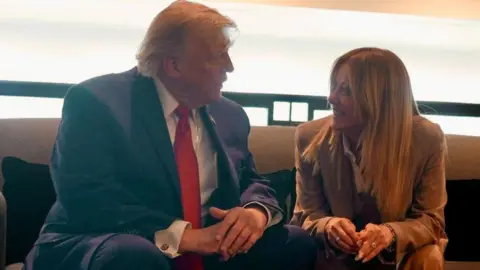
Nato Secretary General Mark Rutte, arguably the Trump whisperer-in-chief, seems to have talked the president down from his dangerously high hobby horse.
The ground may have been laid last week during a visit to Washington by the foreign ministers of Denmark and Greenland. The visit concluded with agreement on a working group to discuss Greenland's future.
But Rutte appears to have finessed an issue that had threatened to shatter the North Atlantic alliance.
We don't yet know the details of the deal, but many will ponder why it necessitated a frenetic two-week crisis to reach an agreement.
Denmark stated it was more than willing to allow an increased American military presence on Greenland.
If NATO has now pledged to boost its presence on and around the island, this should reassure Donald Trump that the alliance is finally paying proper attention to Greenland.
The New York Times reported that discussions included potential arrangements for Denmark to cede sovereignty over small areas of Greenland for the purpose of establishing US military bases.
Trump mentioned that the deal could involve access to Greenland's mineral resources, but neither Denmark nor NATO has confirmed these speculations.
NATO has articulated that discussions would focus on ensuring Arctic security through joint efforts among the seven Arctic allies, aiming to prevent Russia and China from establishing a foothold in Greenland.
The high-drama scenario initiated by Trump might fade, but the interpretations of his actions will linger as his challenges within the global diplomatic arena are analyzed.
Canada's Prime Minister Mark Carney characterized the situation as a rupture, suggesting that established norms are shifting away from the familiar. EU Commission President Ursula von der Leyen labeled the occurrences as a seismic change, advocating for greater European independence.
The world is watching closely for further developments as NATO navigates this evolving situation.