In brief
During the NATO summit in Ankara, Donald Trump offered Ukraine the right to produce Patriot interceptor missiles, a move aimed at countering the surge of Russian ballistic strikes. Zelensky had previously requested such a licence, and he voiced concerns over the shortage of interceptors after recent attacks on Kyiv. While the US is cautious about sharing its stockpiles, Trump assured that the licence would allow rapid production if instructions are supplied. Analysts warn that Ukraine may not yet have the industrial capability to produce advanced missiles, and the process could be supervised overseas. The decision could give Kyiv more defensive options amid a war that has spanned four years and sees Russia using high‑velocity ballistic weapons.
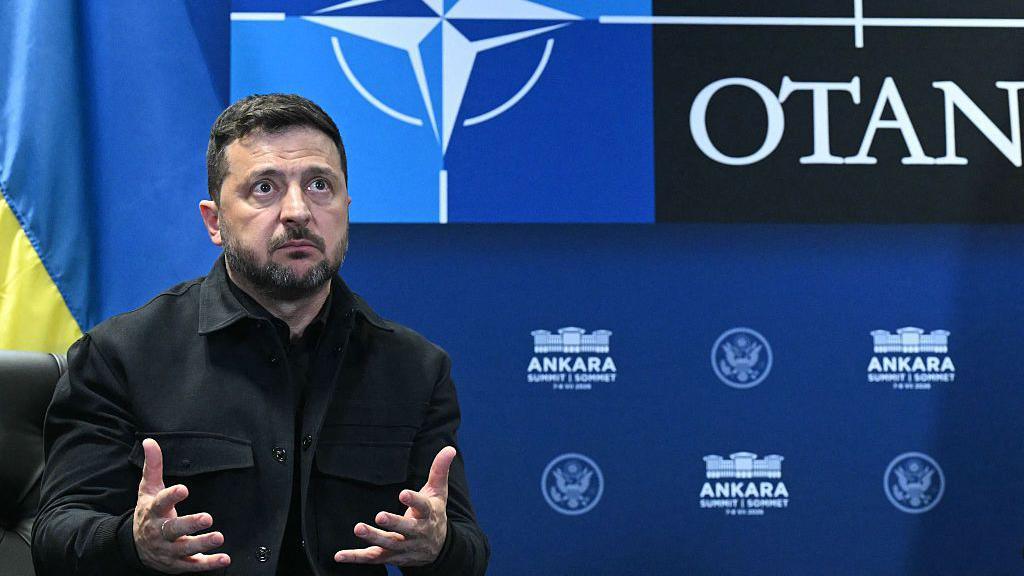
During the NATO summit in Ankara on 8 July, US President Donald Trump announced that he would grant Ukraine a licence to manufacture Patriot interceptor missiles. "We are gonna give you a licence to make Patriots," Trump told Volodymyr Zelensky, saying that production could begin quickly once guidance was provided.
The Patriot system is one of the world’s most advanced air‑defence platforms, with a single battery costing roughly $1 billion. However, the United States produces only about 600 missiles a year and has used over half its stockpile during the conflict with Iran earlier in the year. The Pentagon’s stance has been to keep the stock for its own needs, leaving Ukraine with a critical shortfall. The US defence contractors Lockheed Martin and Raytheon have not yet been briefed on Trump's decision, but Trump assured that the arrangement would work out.
Earlier this year Zelensky formally requested that the US authorize licensed production of Patriots after repeated ballistic‑missile strikes on Ukrainian territory. In May, he highlighted the urgent need because Russia’s high‑velocity rockets combine steep trajectories that are hard to intercept. Last week, the Ukrainian Air Force said a “serious shortage” of interceptor missiles had left 23 Russian‑fired missiles unshot, killing more than 20 people in Kyiv.
Experts caution that Ukrainian factories are not yet equipped to manufacture the sophisticated missile components. Former security‑services officer Ivan Stupak noted, “Ukraine is not able to produce such advanced munitions; it will probably be deployed on European soil under supervision.” The production process could therefore take months and would likely involve overseas sites.
Trump also used the summit to underscore a broader strategy. He mentioned that Zelensky’s long‑range strikes on Russia had been pushing Moscow toward a possible de‑escalation, and he pledged that Ukraine’s missile threats would remind the Kremlin of Iran‑style defenses. US Secretary of State Marco Rubio echoed this by stressing the importance of “showing Moscow how difficult it is to defend its airspace.”
Despite offering the licence, Trump’s plan faces logistical challenges and scepticism from Ukrainian analysts. Whether Ukraine will ultimately receive and produce Patriot batteries remains uncertain, but the U.S. offer signals a new layer of support for Kyiv in the face of Russia’s continuous missile campaign.