In brief
In a significant move, Tamil superstar C Joseph Vijay has announced his transition to politics, launching his party Tamilaga Vettri Kazhagam (TVK) and retiring from acting following the release of his final film, 'Jana Nayagan'. Known for his immense popularity and influence, Vijay aims to resonate with Tamil Nadu's youth as they prepare for the upcoming elections amid critiques of the state's longstanding political parties.
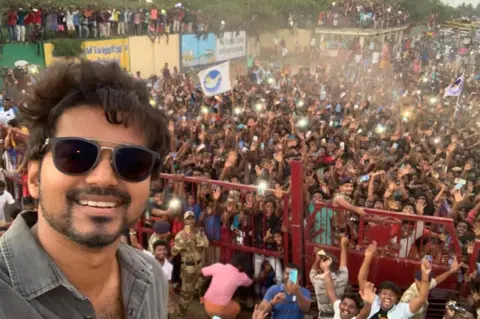
India's southern state of Tamil Nadu has a long, peculiar political tradition: here, cinema doesn't merely entertain, it also governs. From extremely successful political stints of MG Ramachandran - popularly known as MGR - and Jayalalithaa to the more ambivalent experiments of Rajnikanth, Kamal Haasan, and Vijayakanth, the state has repeatedly seen cinema icons turn into full-time politicians. MGR and Jayalalithaa even became chief ministers. Now Tamil superstar C Joseph Vijay, known as Thalapathy Vijay (General Vijay), is the latest to join the list.He launched his political party, Tamilaga Vettri Kazhagam (TVK), in 2024 and soon after announced that he would retire from films to pursue politics full-time. His upcoming film this month, Jana Nayagan (The People's Hero), would be his farewell release, he said. Vijay's reasoning was explicit: politics, he argued, is not something one can dabble in. Tamil Nadu's voters, he said, deserved nothing less than full commitment. And the state's political history supports that calculation.MGR and Jayalalithaa withdrew from active stardom before consolidating power, while Kamal Haasan's hybrid approach yielded limited electoral results. Tamil politics has little patience for half-measures.Steeped in political imagery and rhetoric, Vijay's new film will open in nearly 5,000 cinemas across India and overseas this month. At 51, the star is stepping away from a career most actors would be reluctant to leave. He remains among Indian cinema's most bankable stars, driving festival releases and revenues across the global Tamil diaspora.Chennai-based film critic Aditya Shrikrishna noted that Vijay's appeal has not rested on acting prowess alone. He's not a Kamal Haasan or Rajinikanth in terms of filmography, he said. But his box office pull and fandom are huge and undeniably influential.Vijay's stardom has been carefully cultivated, rooted in a desire for social justice. His film releases double as political rallies, employing themes like farmers' distress and healthcare corruption. The tragic crowd crush at a railway rally, which resulted in the deaths of 40, underscores the pressures of his new political role.With Tamil Nadu heading to elections and a young voting demographic disillusioned by the previous political era, Kumar's entry into politics reflects a backlash against existing party dynamics, posing as a fresh voice aiming to revitalize the political landscape.