In brief
Ukraine’s forces rely on SpaceX’s Starlink satellite network for real‑time battlefield command and for keeping drones connected over great distances. The overnight imposition of a 100‑mph speed cap on drones using the network has severely hampered Ukraine’s ability to track and intercept Russian Shahed jets. Experts warn that the throttling effectively nullifies a key counter‑drone capability that once allowed Ukrainian troops to dominate the skies. The move comes amid growing political friction between Ukraine, the United States and Elon Musk’s company, raising questions about future access to the technology.
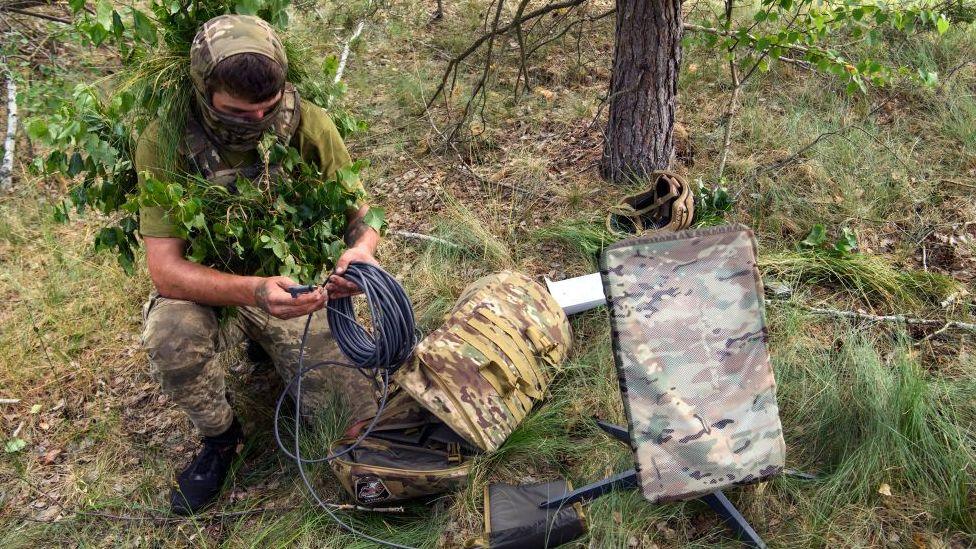
In the ten‑year‑long conflict that began with a Russian invasion in 2022, Ukraine’s armies have turned to Elon Musk’s SpaceX Starlink satellite system as the backbone of their battlefield communications. Starlink’s high‑speed internet allows ground forces, naval units and air patrols to exchange video, text and voice data in real time, a capability that traditional radio networks struggle to match.
One of the most visible uses of the network has been in the drone theater. Ukrainian pilot‑operators can keep their loitering and attack drones fed with data and control signals over much longer ranges, and because the signals travel through space, they are far less prone to jamming than conventional radio links. The result has been a steep advantage against Russian Shahed strike drones, especially those capable of burst speeds above 198 mph.
But overnight, the network’s owners slapped a 100‑mph speed restriction on all drones that ping Starlink. Ukrainian officials were not told beforehand, and the limit has already disrupted several missions, according to a senior advisor to President Zelenskiy. The Institute for the Study of War (ISW) warns that throttling effectively eliminates the ability to chase and intercept jet‑powered Shaheds.
The restriction is not simply a technical tweak. It reflects deeper geopolitical tensions. Musk, who owns the commercial Starlink service, has publicly suggested that the United States’ military may be behind the cutoff, noting that “Starshield systems are owned by the US government” and that any limits are set by the Pentagon or the President. Meanwhile, President Trump and Musk have both publicly criticized Ukraine’s long‑range strikes on Russian infrastructure, further straining U.S.‑Ukrainian defense cooperation.
The story of the network’s influence on the war goes back to the early months of the conflict, when SpaceX quietly stopped providing Starlink terminals to Russian forces after a bus‑based attack on a moving passenger train revealed the vulnerability of the sat‑link to enemy use. Since then, Starlink has become a key force multiplier for Kyiv, underscoring how a commercial satellite constellation can shape the outcomes of modern warfare.
For Ukraine, the value of the satellite mesh goes beyond tactical advantage. It keeps front‑line units from becoming isolated, enabling commanders to issue orders with minimal latency and coordinate artillery fire with near‑real‑time intelligence gathered from their own drones and sensors. That integration of systems is something the Ukrainian ministry and the ISW call “a single real‑time network” that modern battles demand.
What remains uncertain is how long the speed restriction will last and whether it will be lifted once the political and technical negotiations behind it are resolved. For now, the Ukrainian military continues to be deprived of a critical edge while navigating a web of diplomatic pressures and the very real threat posed by Russian electronic warfare.
—Adapted from BBC News coverage on the Starlink crisis in Ukraine.