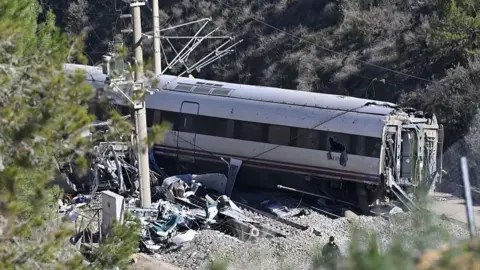
Train drivers in Spain are set to begin a three-day nationwide strike on Monday in a protest over the lack of safety guarantees in the country's rail system. This strike comes in response to two tragic train accidents that shook the nation in January. The first incident occurred on January 18 in Adamuz, where a high-speed train derailed and collided with another train, resulting in the deaths of 46 people, making it the worst rail disaster in a decade. Just two days later, another train crash near Barcelona claimed the life of a trainee driver and injured dozens.
The increasing unrest among train drivers has led them to strike, with the Semaf union advocating for more personnel and better investment in rail maintenance, citing a concerning deterioration of the rail infrastructure. Following the accidents, safety checks revealed faults and maintenance issues on several routes, further heightening concerns about the railway system's operational safety.
Spain's Prime Minister Pedro Sánchez faces questions in parliament later this week regarding the railway system's failings. Despite investments of €700 million in recent years aimed at modernizing the Madrid-Andalusia line, the government has dismissed claims that insufficient funding led to the accidents. Transport Minister Óscar Puente insisted that the rail network does not face issues with maintenance or outdated infrastructure.
This strike, initiated by the train drivers' union, represents a significant push for reforms to ensure safety in railway operations, with many emphasizing the need for immediate action to address the critical state of Spain's railways.
The increasing unrest among train drivers has led them to strike, with the Semaf union advocating for more personnel and better investment in rail maintenance, citing a concerning deterioration of the rail infrastructure. Following the accidents, safety checks revealed faults and maintenance issues on several routes, further heightening concerns about the railway system's operational safety.
Spain's Prime Minister Pedro Sánchez faces questions in parliament later this week regarding the railway system's failings. Despite investments of €700 million in recent years aimed at modernizing the Madrid-Andalusia line, the government has dismissed claims that insufficient funding led to the accidents. Transport Minister Óscar Puente insisted that the rail network does not face issues with maintenance or outdated infrastructure.
This strike, initiated by the train drivers' union, represents a significant push for reforms to ensure safety in railway operations, with many emphasizing the need for immediate action to address the critical state of Spain's railways.