In brief
Slovenia takes unprecedented action by becoming the first EU member to impose fuel rationing, limiting private motorists to 50 liters per day in response to global energy price spikes caused by the US-Israeli strikes on Iran. This measure aims to address the rising local fuel demand while mitigating disruptions experienced by localized 'fuel tourists.'
Slovenia has made history as the first EU member state to introduce fuel rationing to combat disruptions stemming from recent global events, including US-Israeli strikes on Iran and subsequent retaliation affecting their allies in the Gulf, which have reverberated through major energy markets worldwide.
The repercussions of these tensions have led to steep fuel price increases across various nations. In Slovenia, this situation has instigated a phenomenon known as 'fuel tourism,' where motorists from neighboring countries, especially Austria, cross the border to take advantage of Slovenia's regulated prices.
Under the new regulations, private vehicles in Slovenia are now limited to a maximum purchase of 50 liters of fuel per day, while businesses and farmers are allotted a more generous maximum of 200 liters. These restrictions come as reactions to local fuel supply pressures and aim to prevent stockpiling.
Some fuel retailers had already pre-emptively imposed limits. For instance, Hungary's MOL chain previously instituted a 30-liter cap, signaling a regional trend.
Prime Minister Robert Golob reassured citizens that fuel supplies in Slovenia remain ample, stating that storage facilities are well-stocked and shortages are not anticipated. Fuel stations will be responsible for enforcing the new limits, ensuring customers do not exceed the specified allowances.
The current price of Euro-super 95 petrol in Austria hovers near €1.80 (£1.56; $2.09), while diesel approaches €2.00, compared to Slovenia's capped prices of €1.47 and €1.53. However, these prices are expected to increase shortly.
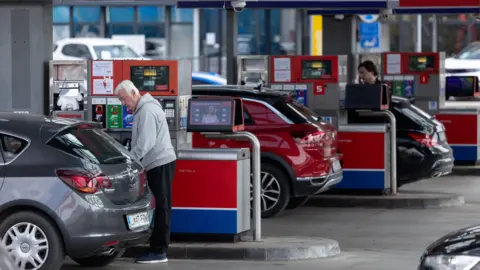
Local media reported that extensive queues have formed at petrol stations, with some outlets running entirely out of fuel. Public sentiment varies; while some Slovenians view 'fuel tourists' as a disruption to local access, others appreciate the economic benefits that these visitors bring to local businesses.
The fuel price disparities spark political discourse as well, with Austrian politicians like Herbert Kickl from the Freedom Party using such situations to highlight economic challenges in their own country. As long as these price differences remain, the trend of 'fuel tourists' is likely to persist.