In brief
Skyroot Aerospace’s Vikram‑1 rocket lifted off from ISRO’s Sriharikota site, reaching low Earth orbit in a 16‑minute flight, making India only the third country to host a private orbital launcher. The seven‑story vehicle, named after scientist Vikram Sarabhai, carries payloads up to 350 kg and will offer on‑demand space launches akin to a taxi service. The test flight carried six satellites, including scientific instruments and a lab‑grown diamond lotus tribute to India’s aerospace pioneers. CEO Pawan Kumar Chandana said the company aims to cut launch wait times and scale production to one rocket per month. This move aligns with India’s ambition to boost its space market share to 10 % by 2030 and launch a commercial space station by 2035.
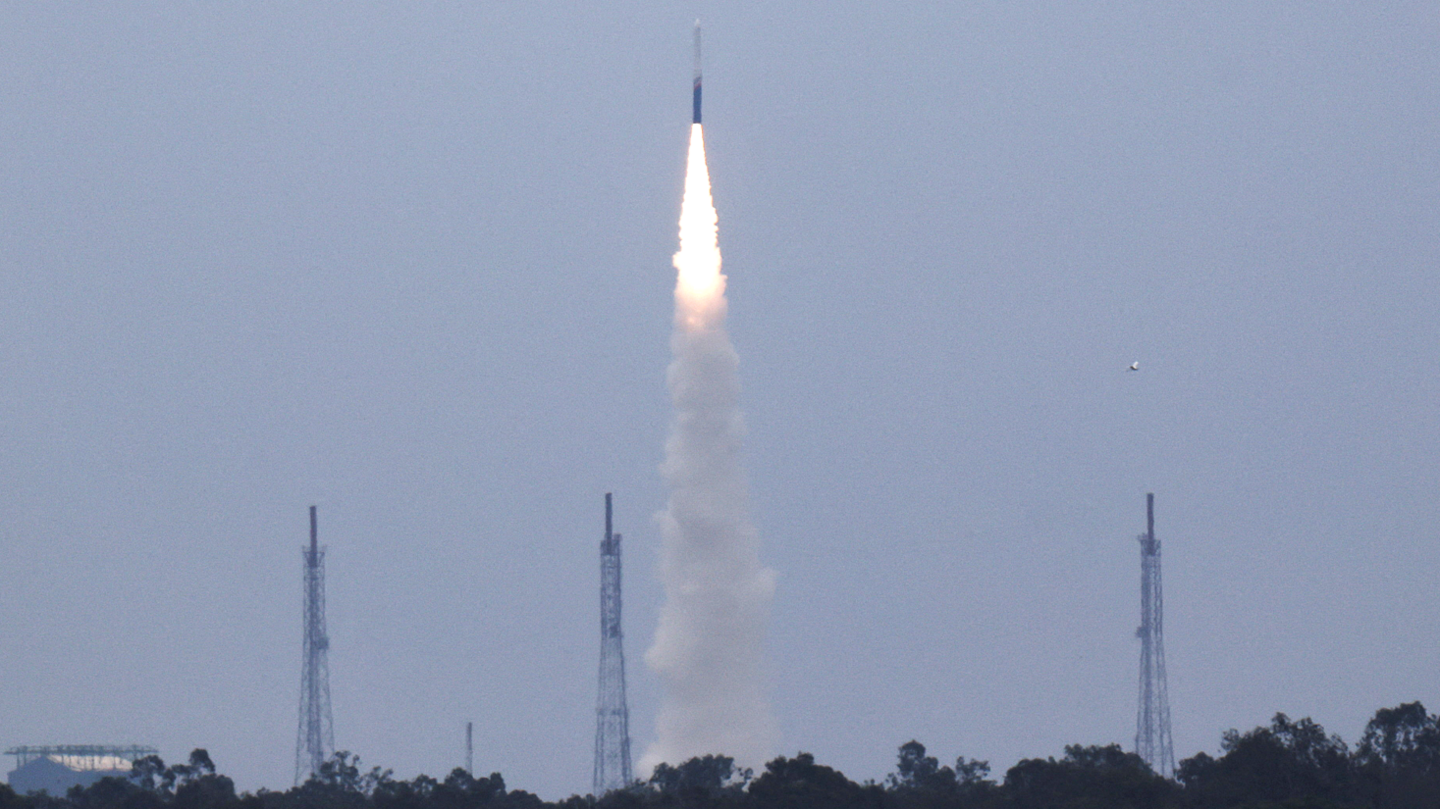
On 18 July 2026, Skyroot Aerospace’s seven‑storey Vikram‑1 rocket lifted off from India’s ISRO launch pad in Sriharikota, travelling 280 miles (450 km) into low Earth orbit in a 16‑minute flight. This marks the first time a private Indian company has placed a vehicle into orbit.
The launch succeeds the company’s earlier sub‑orbital debut and could soon transform satellite deployment, offering on‑demand “cab‑to‑space” services for small payloads. CEO Pawan Kumar Chandana explained that Skyroot will build a rocket every month at its Hyderabad factory, giving satellites a dedicated launch slot rather than the long waits that currently accompany shared rockets.
The test flight’s payload comprised six satellites, including scientific tools such as a robotic arm designed to remove space debris, an Earth‑observation camera and a German satellite. Two symbolic payloads – a tiny gold rocket and a rice‑sized lab‑grown diamond lotus – paid tribute to science pioneers. The diamond lotus, called Cosmic Bloom, was created by Cosmos Diamonds and reflects India’s growing creativity in space‑related art.
India’s broader space programme is in a rapid expansion phase, with plans for astronauts, a Venus orbiter, and a national space station by the mid‑2030s. Skyroot’s rise to a $1.1 billion valuation underscores the country’s ambition to lift its private‑sector share in the global space market from 2 % to 10 % by 2030.
Below is an image of the rocket on launch day.