Saudi Arabia's foreign ministry has called for Yemen's southern factions to attend a dialogue in Riyadh, following a dramatic turn of events that has led to an unprecedented confrontation between Saudi Arabia and the United Arab Emirates in the conflict-ridden state.
For years, both Gulf nations have intervened in Yemen's civil war on behalf of the internationally recognized government. However, a fracturing alliance has led them to back rival factions, with some factions now pursuing the goal of declaring independence in southern Yemen.
Recently, the UAE-backed Southern Transitional Council (STC) announced that a war had begun, accusing Saudi forces of launching attacks with the support of air strikes from the Saudi air force.
In a statement on social media, the Saudi ministry urged a comprehensive conference in Riyadh to bring together all southern factions to discuss just solutions to the southern cause, confirming that the Yemeni government had issued the invitation for talks.
The conflict in Yemen, since its breakout in 2014, has resulted in one of the world's worst humanitarian crises, characterized by a severe hunger emergency affecting millions.
Control in Yemen became more complex when the Iran-backed Houthi movement took control of much of northern Yemen, including the capital Sanaa. The conflict intensified in 2015 when a coalition of Arab states, including Saudi Arabia and the UAE, launched a military campaign aimed at restoring governmental authority.
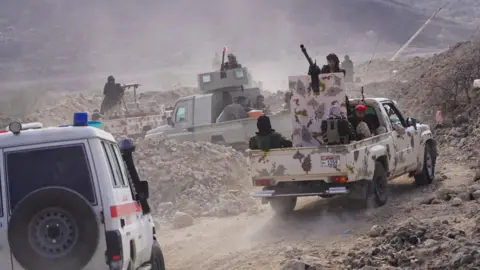
In December, the STC launched a large-scale offensive and rapidly gained ground in southern regions, including Hadramawt province, which borders Saudi Arabia.
While the STC argues that its offensive is to restore stability, it has been characterized as a rebellion by Yemen's Presidential Leadership Council. With Saudi air strikes targeting STC military camps, the situation remains volatile.
The infighting has escalated, particularly after the Saudi-led coalition's recent air strikes in southern Yemen. Allegations of the UAE supplying military equipment to STC forces triggered widespread concern and prompted calls for a withdrawal of Emirati forces from Yemen.
The STC insists on its right to establish an independent state, a stand it claims will not threaten Saudi security. However, analysts predict ongoing conflict due to deep-seated divergences between Saudi and Emirati interests in the region.
As tensions rise, the prospect of wider conflict looms, with millions of Yemenis already bearing the brunt of prolonged violence and economic devastation.