In brief
In Australia, deadly spiders and snakes play a paradoxical role in saving lives through vital antivenom production. The Australian Reptile Park, led by dedicated experts like Emma Teni and Billy Collett, milks venom from these creatures, ensuring the availability of life-saving treatments. With public assistance in capturing venomous animals, the antivenom program has effectively reduced fatalities, demonstrating a unique relationship between humans and nature's most dangerous species.
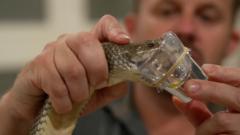
In Australia, a land notorious for its deadly wildlife, venomous animals are at the forefront of saving lives through antivenom production. At the Australian Reptile Park, spider keeper Emma Teni meticulously milks the venom from Sydney funnel-web spiders, known as one of the deadliest species in the world. Her tiny office, affectionately dubbed the “spider milking room,” is filled with these creatures as she extracts venom to support a vital government antivenom program.Teni recounts how, since the program's inception in 1981, no fatalities from the Sydney funnel-web spider have occurred, thanks to effective first aid responses and the availability of antivenom. Public involvement is crucial; ordinary citizens like handyman Charlie Simpson are encouraged to catch and safely deliver these spiders for milking instead of killing them. This initiative not only reduces fears but also helps save lives.While male funnel-webs are utilized for antivenom due to their more potent venom, Teni's team also considers females for breeding, ensuring a sustainable supply of spiders. On an average day, her team milks around 80 spiders, with the venom being collected through a suction-assisted pipette, enough to fill vials for those in urgent need.Conversely, Billy Collett, operations manager at the park, handles snakes, demonstrating that bites are typically avoidable; snakes prefer not to interact with humans. The venom collected from various snake species helps in producing antivenom, which is distributed widely, including to regions in Papua New Guinea where snake bites are common.Training horses and rabbits to build antibodies against the venom plays a critical role in antivenom production, which can take many months. The team at CSL Seqirus, responsible for the development of these life-saving treatments, ensures enough vials are available for distribution, especially to rural areas where the risk of bites is higher.Although Australia’s wildlife poses potential dangers, experts like Teni and Collett aim to educate the public on safe interactions. They emphasize the importance of not letting fear deter individuals from appreciating the unique biodiversity of the country, highlighting that with proper precautions, one of the deadliest places can also be one of the safest.