In brief
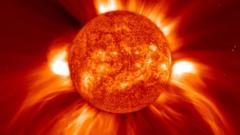
Indian scientists have announced a major breakthrough from the Aditya-L1 mission, the nation's first for solar observation, by capturing critical data on coronal mass ejections (CMEs). Using its key instrument, the Visible Emission Line Coronagraph (Velc), they successfully estimated the onset of a CME on July 16. CMEs are massive bursts of solar particles that can travel at speeds up to 3,000 km per second and impact both Earth and space-based technology.
The CME in question began at 13:08 GMT and originated on the Earth's side of the Sun but altered its course and posed no threat. While these solar outbursts generally do not endanger human life directly, they can disrupt satellites and wreak havoc with Earth’s power grids, as highlighted by several historical incidents, including the 1989 Quebec power outage.With Aditya-L1, India joins the ranks of NASA, ESA, and other space agencies in monitoring solar activity. Prof. R Ramesh explains that their coronagraph can maintain continuous observation of the solar corona, offering a crucial advantage in potentially predicting the impact of solar storms on modern technology, including communication systems and GPS. By analyzing data from Aditya-L1 alongside ground-based observatories across India, researchers aim to enhance our understanding of solar phenomena and improve preparedness against their effects.