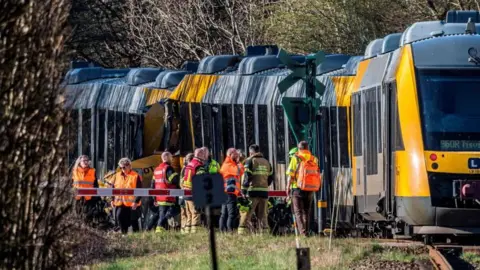
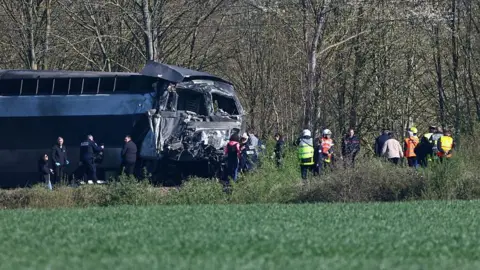
A passenger has described chaos after two trains collided head-on near Peru's most popular tourist attraction, Machu Picchu.
Niels Honkoop, 33, told the BBC he had switched seats part-way through the journey from the middle of the train to the back, before it crashed, injuring many of those sitting near the front.
I saw staff running around and people crying and people on the floor and chaos erupted, he said. We got off the train and I saw people bleeding with very severe injuries.
A train driver was killed and at least 40 others were injured in the crash, which took place at around 13:20 local time (18:20 GMT) on Tuesday.
Mr. Honkoop reported that the table in front of him broke in two. Shattered glass littered the floor of the carriage, and many were lying wounded in the aisle. One woman he saw was trapped between a bench and a table.
He tried to assist by moving luggage and handing out painkillers, as he had brought along medication for his own recovery.
The UK Foreign Office said it was supporting a number of British nationals involved in the crash, while the US embassy in Peru reported that US citizens were injured.
Following the incident, Mr. Honkoop stated that another train arrived with medical assistance. He and his tour group were evacuated to a nearby village where they received food, medical care, and accommodation.
The collision occurred on the track linking Ollantaytambo Station and Aguas Calientes, which typically takes about 90 minutes to traverse.
The two trains involved in the accident were operated by PeruRail and Inca Rail respectively.
PeruRail expressed its regret about the incident, stating that its staff had immediately provided first aid to the affected individuals. The cause of the accident remains unclear.
This incident comes amid a dispute over transport services to Machu Picchu, where locals have raised concerns about the bidding process being insufficiently transparent.
Machu Picchu, one of the Seven Modern Wonders of the World, is a UNESCO World Heritage site built in the 15th century. Visitors often rely on trains and buses to access the location, which can be expensive due to its inaccessibility.
In efforts to prevent overcrowding, officials imposed a daily cap on visitor numbers in 2011, but the site still faces challenges with over-tourism.