In brief
Svitlana Halchenko, a port warehouse shift manager, survived a Russian missile strike that killed two colleagues and left her with shrapnel in her leg and back. The attack is part of a recent surge of Russian strikes on Ukraine’s Black Sea ports, with 57 attacks on civilian vessels in July alone. The bombardment has left the Odesa docks empty, giant gantry cranes idle, and the city’s vital grain export capacity cut by roughly a third. While the city’s beaches still draw holidaymakers, they too are not immune to drone‑related dangers. The crisis not only stalls commerce but threatens millions of tonnes of grain and oilseed exports.”
Svitlana Halchenko, a warehouse shift manager at Odesa’s main port, is still haunted by the day a Russian ballistic missile exploded less than a kilometre from her station, killing her crane operator partner and a driver who was inside the cab.
She walks with a limp today, her leg and back still bearing the remnants of shrapnel. Yet despite her injuries she keeps coming in to keep the yard running. The empty. The cranes are idle and only a skeleton crew is keeping the operations moving.
Data from the port administration shows that in July there were 57 Russian strikes on civilian vessels – 22 at sea – and another 67 hits on port infrastructure. The Black Sea has become one of the world’s most dangerous shipping lanes, with the July period marking it the deadliest month for merchant seamen since the war began.
“My crane operator, my partner, died five metres from me… The driver remained in the cabin. He also died.” – Svitlana Halchenko
The shutdown is felt far beyond the docks. Volodymyr Slavinskyi, trading director of grain exporter Nibulon, says that Ukraine has already lost the ability to deliver about 700,000 metric tons of grain to global markets because the ports are effectively closed for the majority of the day.
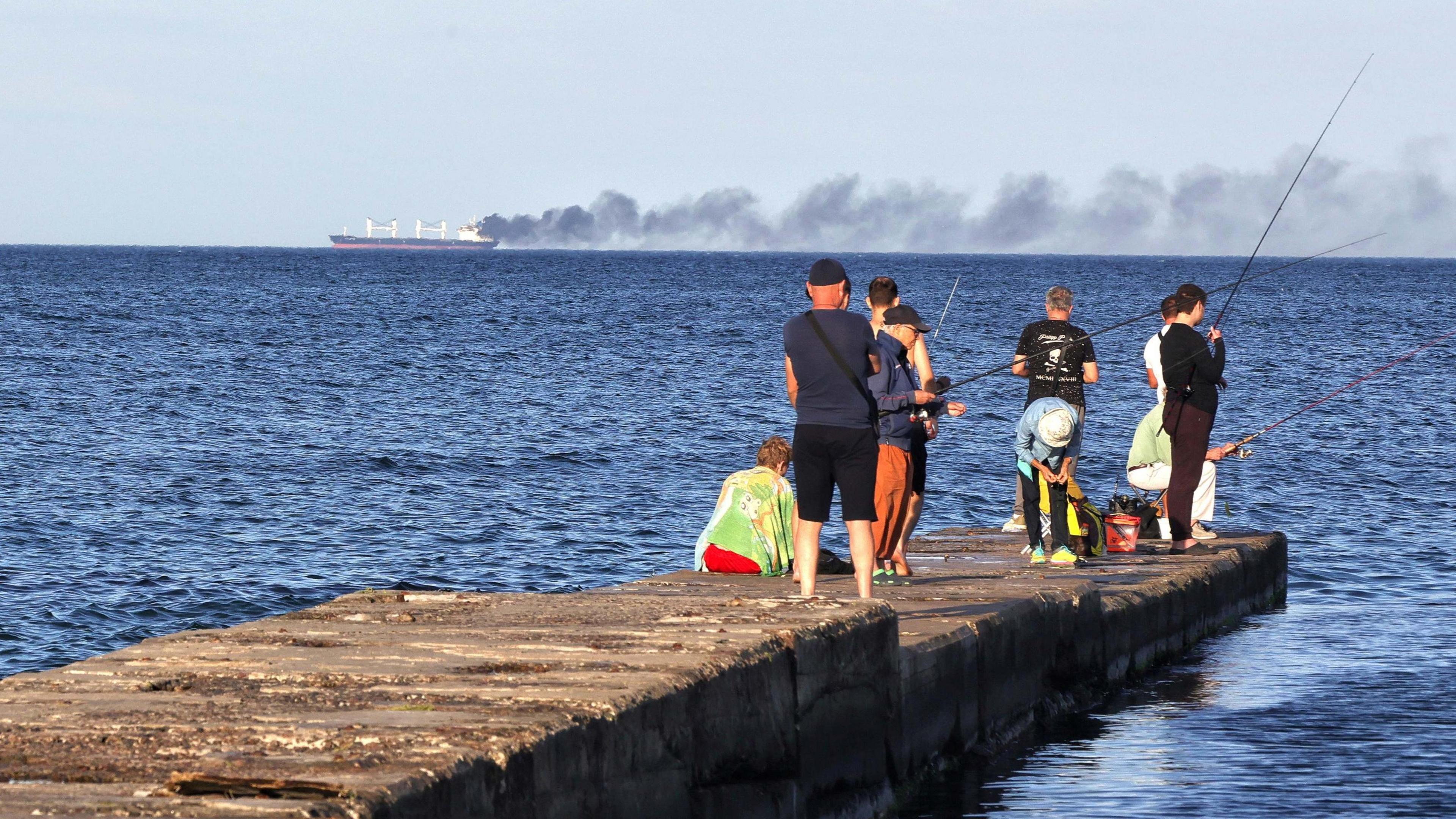
The Odesa region is high‑risk because it lies adjacent to Russian‑occupied Crimea, and a missile from Crimea can reach the port in roughly a minute. Workers must flee to shelters in less than four minutes or face loss of life. The city’s beaches – still packed with holidaymakers in the summer – have also seen casualties, with two drones crashing into crowds, killing civilians.
The Ukrainian military claims to be striking around 200 Russian vessels under Operation MoLoChKa in retaliation for attacks on Russian shipping. Whether the war is a game of one‑up‑the‑other or a desperate campaign to keep grain out of Russian hands, the cost to Ukraine’s economy and the risk to everyday lives remains starkly clear.
Considering that Ukraine contributed around 6% of global wheat exports and 10% of corn before the invasion, the ongoing strike wave threatens to unsettle global food supplies and push a large portion of cargo into storage instead of markets.
In the midst of this blockade, the city has chosen to keep being a popular tourist destination, with visitors flocking to the beaches, but with near‑constant sirens and sporadic explosions. The dual reality of holiday and hazard underscores just how tightly the conflict has seeped into everyday life in Odesa.