In brief
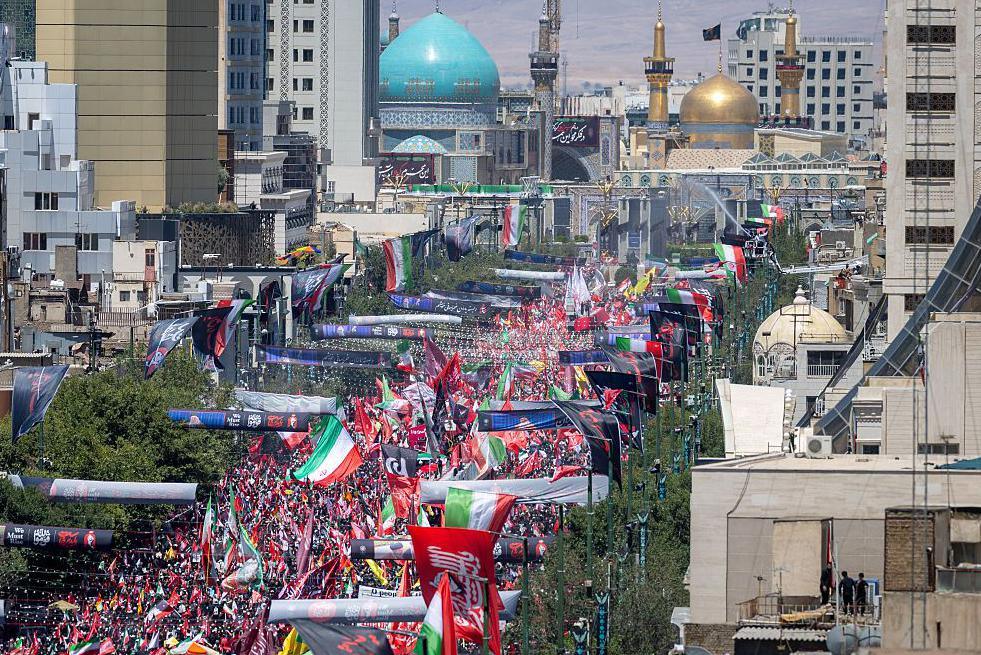
In Mashhad, the holy city of Iran, hordes of mourners gathered for the burial of the late Supreme Leader Ayatollah Ali Khamenei. The funeral took place at the Imam Reza shrine after six days of public mourning across Iran and Iraq. The service rattled as the US and Iran fought a new exchange of air strikes, threatening a fragile peace deal. Crowds carried flags, banners and photographs while calling for the death of Donald Trump and Benjamin Netanyahu. The burial underscored Iran’s resolve and unity amid ongoing war with Israel and looming negotiations over nuclear policy.
In the northern Iranian city of Mashhad, large crowds poured onto the streets for the burial of former Supreme Leader Ayatollah Ali Khamenei. The coffin, arriving from Iraq by plane, was carried to the Imam Reza shrine, the holiest Shia site, after six days of mourning ceremonies across five cities, including Tehran, Qom and towns in Iraq.
The funeral was witnessed by thousands dressed in black, waving Iranian flags and red banners while holding photographs of Khamenei and placards demanding the death of US President Donald Trump and Israeli Prime Minister Benjamin Netanyahu. The procession reflected a precise choreographed display of unity and defiance imposed by Iran’s leadership after the September 2023 war with Israel.
The death of Khamenei comes at a critical juncture, as a recent exchange of strikes between Iran and the United States threatens to derail a proposed peace protocol intended to end the hostilities. Iran’s Revolutionary Guards condemned US bombing of railway bridges and counter‑attacked U.S. facilities in the Gulf, while the U.S. stated it was targeting Iranian forces to limit shipping routes in the Strait of Hormuz.
Khamenei had ruled Iran since 1989, maintaining tight control over politics, the armed forces and civil society, and had consistently opposed the U.S. and Israel. His succession by his son Mojtaba, who was wounded in the same air attack that killed his father, remains unclear as the new leader has yet to appear in public.
For many Iranian mourners, the funeral is not just a ceremonious end but a statement of resilience. "The pain is deeper than losing parents," a woman told AFP, adding that only the demise of Trump and Netanyahu could ease their grief. The burial procession therefore symbolizes both reverence for a patriarch and a platform for national solidarity amid a volatile geopolitical climate.