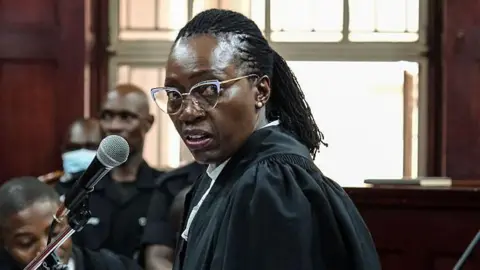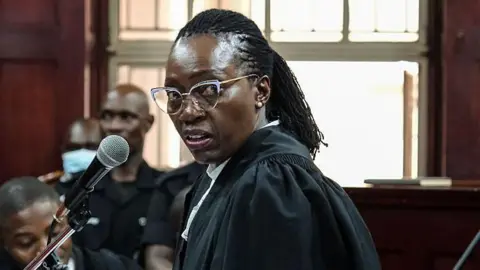
Kenyan former justice minister and lawyer Martha Karua was denied entry into Uganda after landing at Entebbe airport on a mission to help defend a detained opposition leader. The move came as her colleague, lawyer Erias Lukwago, whose own detention was in question, was scheduled for a bail hearing.
Karua had been summoned to support the legal team representing Kizza Besigye, a former opposition chief who has faced treason charges in both Kenya and Uganda. Besigye’s case has become a flashpoint for discussions on jurisdiction and human‑rights standards across the East African corridor.
When the Ugandan immigration authorities exercised the ban, they offered no stated reason, while Kenya’s Law Society President Charles Kanjama, who had traveled with Karua, was allowed entry. A statement from Karua’s office noted that she had been detained at the airport, was expected to return to Nairobi on Monday, and remained “incommunicado.”
The incident has prompted a call from Kenyan legal circles for a full explanation, especially given the stark contrast between Karua’s treatment and that of a fellow lawyer who was admitted to the country. Uganda’s immigration officials have yet to respond to queries from the BBC.
Karua’s career has been punctuated by obstacles: her initial application to practise in Uganda was rejected, she was deported from Tanzania last year, and she has encountered repeated attempts to impede her presence in courts dealing with politically sensitive cases.
The broader implications of this event resonate across the region, highlighting the precarious state of legal practice amid political prosecutions and the fragility of cross‑border legal cooperation.