In brief
New satellite analyses reveal that tropical forests experienced the highest destruction rate on record in 2024, raising urgent alarms about sustainability and environmental resilience.
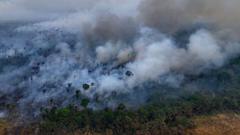
In a startling development, 67,000 square kilometers of vital tropical forests vanished last year, an area roughly equal to the size of the Republic of Ireland and equating to nearly 18 football pitches lost every minute. Fires emerged as the main driver of this forest loss, surpassing agricultural land clearances for the first time, with the Amazon rainforest severely impacted due to extreme drought conditions. Experts point to the dangers of forest ecosystems reaching a "tipping point" where irreversible decline becomes a reality, particularly in regions like the Amazon. Professor Matthew Hansen, co-director of the University of Maryland's GLAD laboratory, expressed alarm over the potential "savannisation" of the rainforest, indicating a shift from lush greenery to savanna landscapes. A contemporaneous study highlighted that if global warming transcends the target limit of 1.5C, the Amazon's viability would be drastically threatened, impacting biodiversity and global climate stability. Historically, this biome has absorbed more CO2 than it emitted, but current destruction rates present a stark reversal, releasing approximately 3.1 billion tonnes of greenhouse gases—comparable to the emissions of the European Union.While the Amazon faces unprecedented challenges driven by climate change and severe drought intensified by the El Niño phenomenon, nations in Southeast Asia are demonstrating a moderately positive trend. Indonesia reported an 11% reduction in forest loss compared to the previous year, attributed to effective enforcement of non-burning regulations, showcasing a glimmer of hope in conservation efforts.Experts emphasize the critical need for sustained political commitment to forest preservation. The upcoming COP30 climate summit in the Amazon is pegged as a pivotal opportunity to devise collaborative strategies for forest protection, including potential financial incentives for maintaining forested areas over their destruction. The newly emerging patterns highlight the urgent need for comprehensive global policy approaches to protect these vital ecosystems from the compounded risks of climate change and economic pressures.