In brief
After the catastrophic Eaton fires of January 2025, many homes in Altadena, California remain tainted with toxic ash. While homeowners attempt to clean up and move back, studies reveal alarming levels of lead and asbestos, causing health issues and raising alarms over indoor air quality. Residents, battling insurance challenges, are left feeling unsafe in their own homes and grappling with the long-term impacts of contamination.
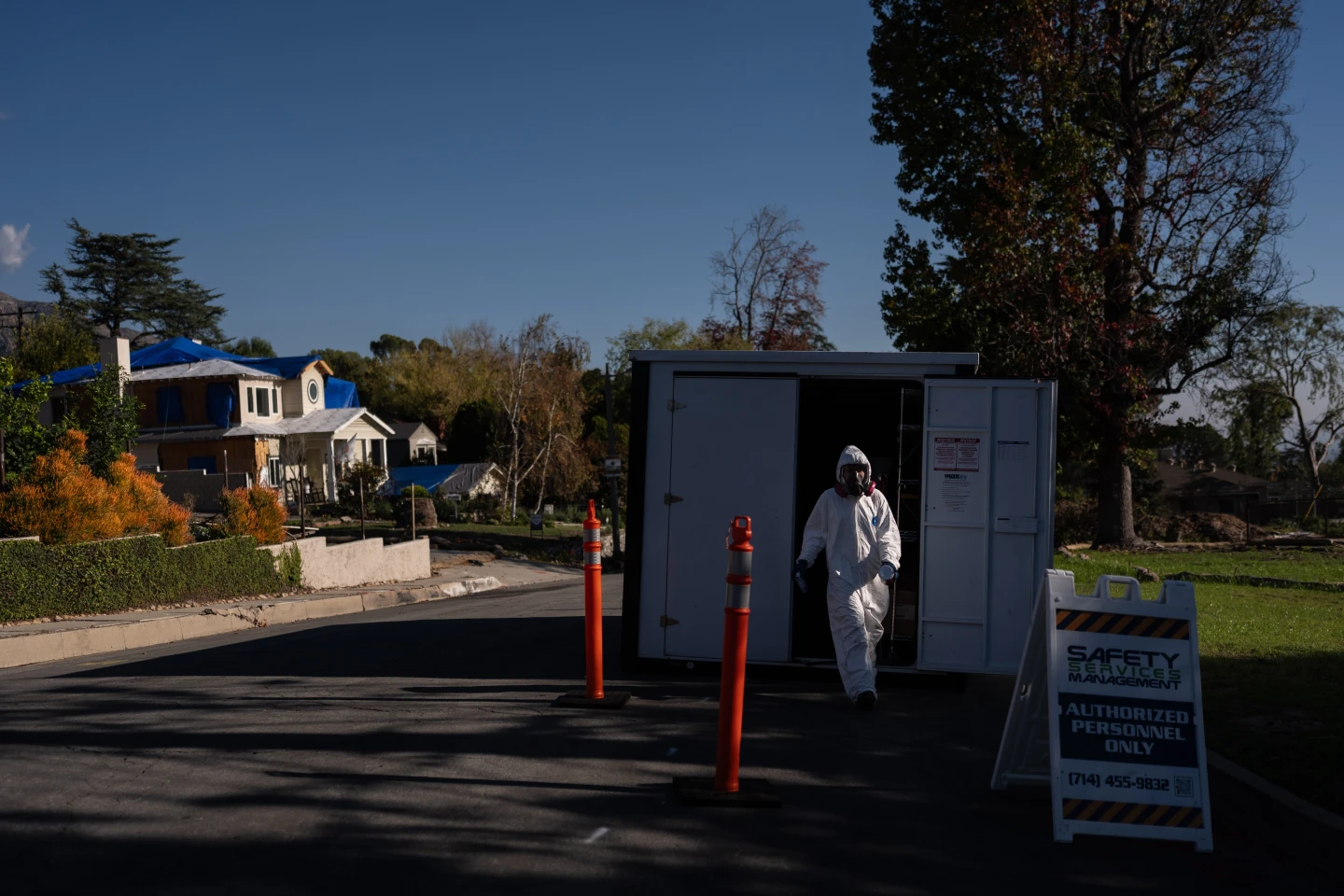
ALTADENA, Calif. — Signs warn of lead hazards on the doors of homes affected by the Eaton Fire. As residents sift through the aftermath, it’s clear that the dangers of contamination linger long after the flames have been extinguished.
Homeowners, insurance woes and hazardous cleanup efforts dominate life in Altadena a year after the destructive wildfires that ravaged the area, leaving a legacy of toxic risks. Wearing masks and protective gear, residents confront the tangible remnants of ash and pollutants threatening their health.
The January 7, 2025, fires claimed at least 31 lives and destroyed thousands of structures, compelling survivors to deal with enduring fears of hidden contaminants. Between lead, asbestos, and volatile organic compounds, residents endure a daunting reality of unsafe living conditions.
Indoor air quality post-wildfire is understudied, leaving many in peril. We don't feel safe in our own homes, laments one resident, Nina Malone, who struggles with persistent respiratory issues since moving back into her home, ironically considered a sanctuary for two decades.
As they tentatively return to normalcy, a report reveals alarming data: 60% of surveyed homes still harbor hazardous lead and asbestos. Homeowners argue with their insurance providers that fail to cover adequate remediation costs, forcing them to pay out of pocket amid escalating treatment bills.
Dr. Lisa Patel emphasizes the risks to vulnerable populations like children and pregnant women, urging clinical responses to the ongoing contamination crises. The emotional toll weighs heavily as families navigate uncertainty and fear, epitomized by Julie Lawson’s efforts to ensure her home can be deemed safe for her family.
As the community emerges from the disaster, the challenges ahead morph from physical hazards into long-term recovery, mental resiliency, and a quest for equitable insurance solutions. The scars of nature's fury might fade, but the fight for health and safety continues.