
In brief
As China's Shenzhou 19 lifts off with its youngest-ever crew, the nation embarks on a bold space exploration mission. Amid global tensions, the focus shifts to who will dominate lunar resources and technological advancements, sparking debates over military and civilian space objectives.
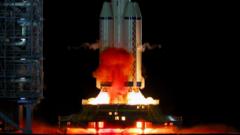
China's space ambitions reached new heights recently as the Shenzhou 19 mission advanced with the launch of its youngest-ever crew of astronauts, or taikonauts. The mission, taking place in the Gobi Desert at the Jiuquan Satellite Launch Center, aims for a six-month stay at China's Tiangong space station. President Xi Jinping envisions this as part of a larger goal to establish Chinese presence on the Moon by 2030, amidst concerns from the US about China's rapid advancements.At the launch, excitement filled the air as crowds gathered to witness the moment. Led by mission pilot Cai Xuzhe, alongside fellow taikonauts Wang Haoze and Song Lingdong, the team embodies a youthful energy seen as pivotal for future space endeavors. With national pride evident, the crew reaffirmed their dedication to the mission and China's position in space exploration.China's accomplishments in the space arena have been noteworthy over the past few years, including successful missions to Mars and Moon sample retrievals. However, this emerging space race has raised questions about international ambitions and the implications of such advancements. US officials fear China's advancements could lead to military applications, complicating the narrative of space as an area for peaceful exploration.In response, Chinese space officials advocate for the collaborative potential of their missions, dismissing competitive perceptions. The Moon is now seen as a resource-rich frontier, leading experts to predict a long-term investment approach as nations consider the economic value of lunar materials.China's space program continues to gain momentum, driven by a roadmap that includes lunar bases and even more intricate missions. Despite striving for advanced capabilities, officials acknowledge the hurdles in technology development needed for reaching the Moon.While China showcases its progress to the world, strict measures are in place to protect its strategic interests. Foreign media access remains controlled, underscoring the significance of secrecy in the competitive environment of space exploration. As the rivalry between China and the US unfolds, the prospect of potential territorial claims in space looms large, shaping the future exploration landscape.

