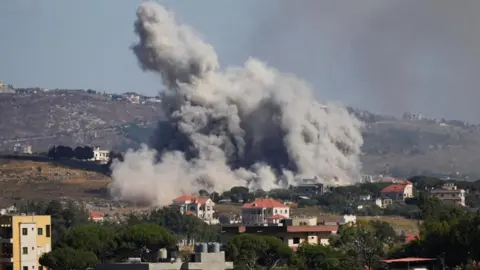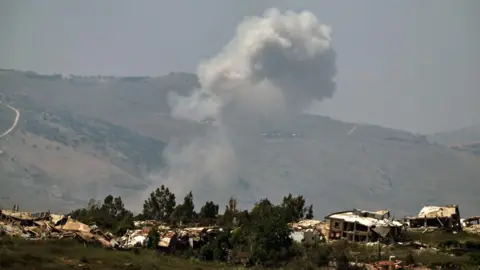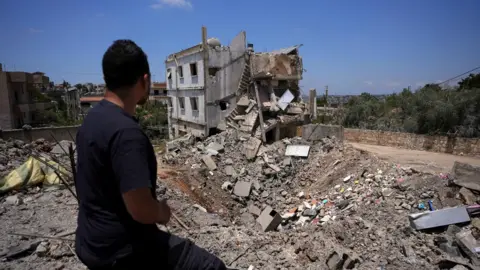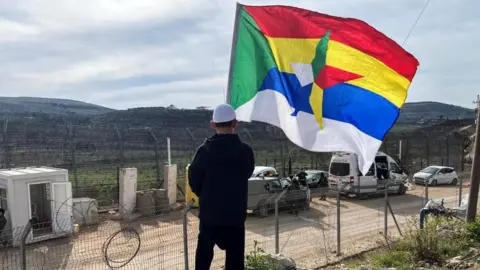
Israel says it has carried out air strikes on Syrian government infrastructure in the south of the country, in response to what it described as attacks on Druze civilians in Suweida province. In a statement, the Israeli military said it hit a command centre and weapons stored at army compounds overnight. 'The IDF [Israel Defense Forces] will not tolerate harm towards the Druze population in Syria and will continue to operate to defend them,' it emphasized. The Syrian foreign ministry denounced the attack as 'an outrageous assault on Syria's sovereignty and territorial integrity' and called Israel's justification 'flimsy pretexts and fabricated excuses'. Furthermore, the ministry claimed that the strikes represent an escalation of Israel's policy of interference in Syria's internal affairs.
Israeli Defence Minister Israel Katz warned of further action, stating that Israel would not allow the Syrian government to exploit the wider regional war to target Druze communities, indicating that counterstrikes could occur 'with even greater force' if necessary.
This latest military action comes amid escalating violence in Suweida, where clashes between government forces and local armed groups have intensified following an attempted incursion by Druze militiamen into government-held territories. According to a UK-based war monitor, fighting erupted after mortar fire landed in areas controlled by Druze groups, escalating tension in the region. The Syrian government reported that its security forces dismantled a criminal network engaged in car theft and drug trafficking, asserting that it intervened to restore order.
Previously, clashes involving Druze fighters, Sunni Bedouin tribes, and government forces have contributed to significant unrest in Suweida.
Analysts suggest that while some fear Syria might become more embroiled in regional conflicts, the current escalation is primarily linked to internal dynamics. Syrian President Ahmed al-Sharaa has expressed a commitment to avoiding conflict, advocating for calculated diplomatic approaches to maintain stability in Syria.
Israeli Defence Minister Israel Katz warned of further action, stating that Israel would not allow the Syrian government to exploit the wider regional war to target Druze communities, indicating that counterstrikes could occur 'with even greater force' if necessary.
This latest military action comes amid escalating violence in Suweida, where clashes between government forces and local armed groups have intensified following an attempted incursion by Druze militiamen into government-held territories. According to a UK-based war monitor, fighting erupted after mortar fire landed in areas controlled by Druze groups, escalating tension in the region. The Syrian government reported that its security forces dismantled a criminal network engaged in car theft and drug trafficking, asserting that it intervened to restore order.
Previously, clashes involving Druze fighters, Sunni Bedouin tribes, and government forces have contributed to significant unrest in Suweida.
Analysts suggest that while some fear Syria might become more embroiled in regional conflicts, the current escalation is primarily linked to internal dynamics. Syrian President Ahmed al-Sharaa has expressed a commitment to avoiding conflict, advocating for calculated diplomatic approaches to maintain stability in Syria.