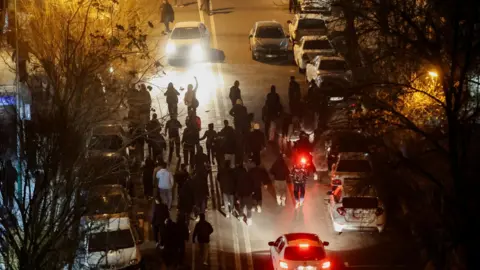
Protests in Iran have turned deadly as civilians express dissent against the regime's handling of economic challenges. Reflecting on the recent violence, Parisa, a 29-year-old Tehran resident stated, 'In the most widespread previous protests, I didn't personally know a single person who had been killed.' Reports have emerged confirming that at least 6,159 individuals have died since unrest escalated on December 28, with countless protesters now knowing someone who has lost their life amid the strife.
Witnesses describe a chaos-ridden atmosphere where security forces wield live ammunition with apparent disregard for human life. Mehdi, a 24-year-old, relayed his horror at witnessing killings, stating, 'Motorcyclists shot a young man in the face with a shotgun. He fell on the spot and never got back up.' As tensions deepen, widespread fear and mourning grip communities, compounded by a government-imposed communication blackout, which stifles the flow of critical information.
Additionally, many protesters face threats and coercion regarding the treatment of deceased loved ones. Families report being asked to pay exorbitant amounts for the return of bodies or to falsely label victims as security personnel. This grim reality is emblematic of the Iranian government's attempts to downplay the severity of the situation, even as human rights organizations decry the state’s violent reprisals.
Sahar, a protester, shared firsthand accounts of her friends and acquaintances being shot, while another activist, Parnia, described seeing children among those injured and killed. The atmosphere remains fraught, as the government fights to maintain control amidst the people's urgent calls for change.
Witnesses describe a chaos-ridden atmosphere where security forces wield live ammunition with apparent disregard for human life. Mehdi, a 24-year-old, relayed his horror at witnessing killings, stating, 'Motorcyclists shot a young man in the face with a shotgun. He fell on the spot and never got back up.' As tensions deepen, widespread fear and mourning grip communities, compounded by a government-imposed communication blackout, which stifles the flow of critical information.
Additionally, many protesters face threats and coercion regarding the treatment of deceased loved ones. Families report being asked to pay exorbitant amounts for the return of bodies or to falsely label victims as security personnel. This grim reality is emblematic of the Iranian government's attempts to downplay the severity of the situation, even as human rights organizations decry the state’s violent reprisals.
Sahar, a protester, shared firsthand accounts of her friends and acquaintances being shot, while another activist, Parnia, described seeing children among those injured and killed. The atmosphere remains fraught, as the government fights to maintain control amidst the people's urgent calls for change.