In brief
Scientists leverage X-rays and AI to virtually explore an ancient scroll charred by Vesuvius, igniting hope for historical insights.
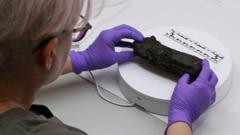
A remarkable breakthrough has been achieved in the study of ancient literature with the digital unwrapping of a scroll from Herculaneum, decimated by the Mount Vesuvius eruption in 79 AD. This fragile artifact, resembling a chunk of charcoal due to its severe scorching, has remained unreadable for millennia, but recent advancements in X-ray imaging and artificial intelligence are shedding light on its contents, revealing the potential for deciphering the text. The Vesuvius Challenge, an international initiative aimed at understanding the Herculaneum scrolls, is leading the charge. Stephen Parsons, the project lead, expressed optimism about fully reading the scroll soon, stating that early scans already reveal rows of letters indicative of philosophical discourse. The scroll, conserved at the Bodleian Library, has remained untouched due to its brittleness – prior attempts to physically open similar documents resulted in their destruction. Nicole Gilroy, head of book conservation at the library, remarked on the previously limited confidence in techniques available, making this project significant. Utilizing the Diamond Light Source synchrotron facility, researchers employed high-powered X-ray beams to create a 3D reconstruction of the scroll, which encompasses around 10 meters of papyrus. The challenge lay in distinguishing the ink from the carbon-based papyrus material, but AI technologies are increasingly proving effective at identifying the remaining text. The excitement builds as the project reports a clear initial view of the scroll's text, and purposes to transform a few legible words into substantial passages. This work not only aims to reveal philosophical content, potentially linked to Epicurean principles, but also establishes a powerful connection to the individuals from the past who created these scrolls. As scholars continue to devise ways of digitally unraveling these artifacts, the prospect of accessing lost knowledge from antiquity appears ever closer.