In brief
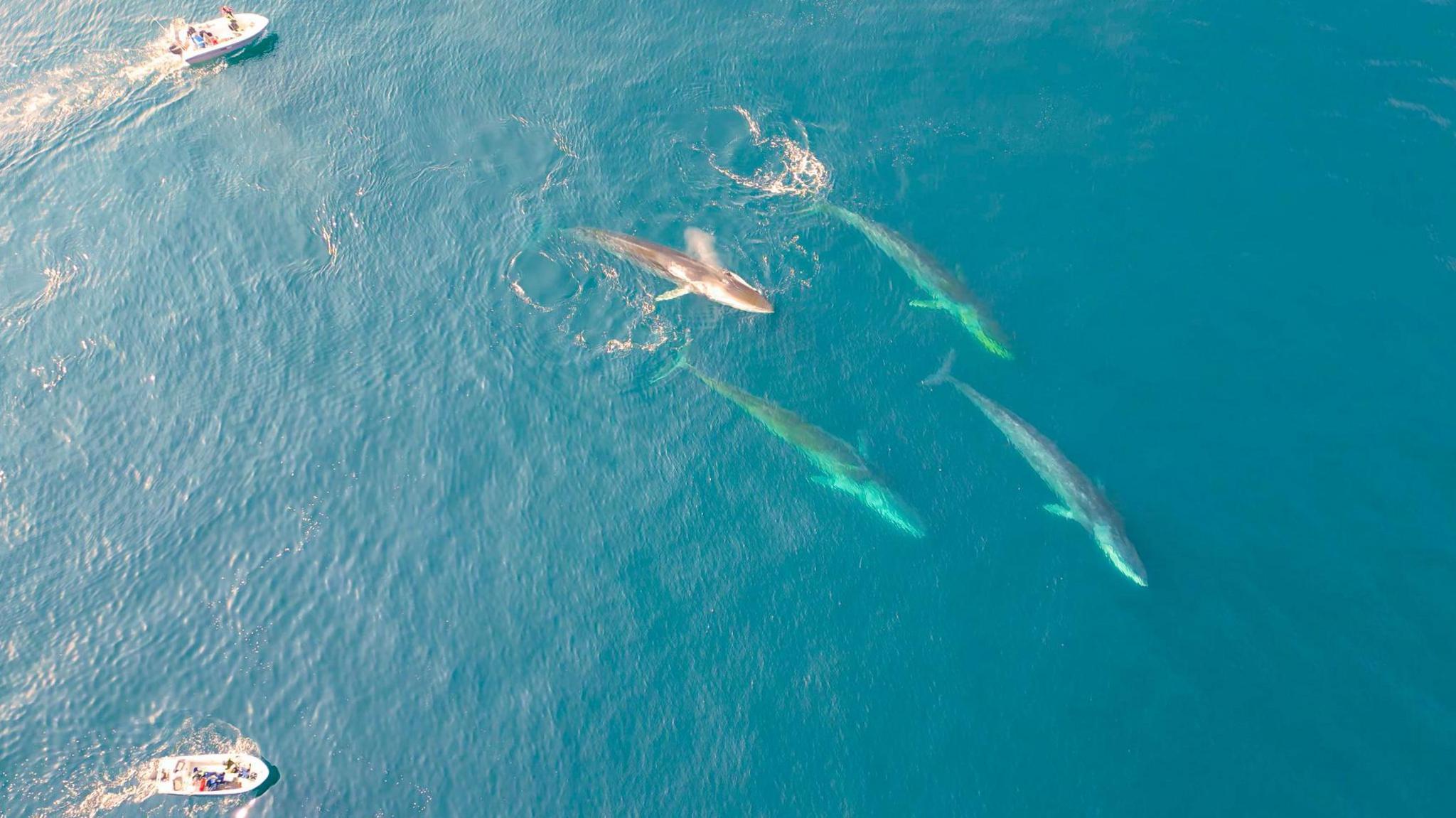
Researchers have documented a rapid influx of large baleen whales into East Greenland’s now ice‑free coastal waters. Data from ship and aerial surveys, satellite tagging and Inuit hunter testimony paint a picture of a major ecological regime shift. Since 2006 nine humpback whales were recorded; by 2024 the region saw about 150 sightings. The warming seas are providing new feeding grounds for these species, but can also threaten native Arctic fauna.
Sea ice loss in East Greenland has opened its waters to some of the planet’s biggest whales.
For almost twenty years scientists have been tracking the comets of the ocean. Their files include thousands of photos and sound recordings of humpbacks, minke and fin whales. Until 2006 the East Greenland coast, iced‑tight every summer, never produced a single feeding sighting of these giants.
Once the ice began to melt, the megafauna discovered a new feeding arena. In the summer of 2007 seven humpback whales were spotted by ships and that number climbed to roughly 150 in 2024. Aerial surveys of the area carried out by the Greenland Institute of Natural Resources in 2015 and again in 2024 confirmed the surge, and the team added satellite tags to 15 whales to track their seasonal routes.
Professor Mads Peter Heide‑Jørgensen calls this a “major ecological regime shift.” He explains that the rising waters are not only warm enough for the whales to fish but also bring abundant prey such as fish and krill. The study estimates that those three species consume over 800 000 tonnes of food in the short summer season.
While the larger baleen whales seem to gain from the warming, a spectrum of smaller Arctic species is feeling the pressure. Narwhals and beluga whales are reported to be displaced or to share habitats in the newly open waters. “Climate change opens up new opportunities for some, but others lose their home,” says Prof Heide‑Jørgensen.
The research, which reached the door of the international journal Frontiers in Marine Science last week, highlights humanity’s delicate balance with nature’s moving parts.
Learn more about the study here.