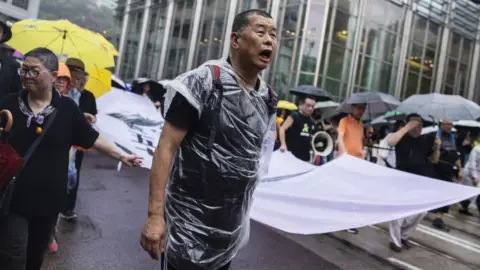
Hong Kong pro-democracy campaigner and media tycoon Jimmy Lai has been found guilty of colluding with foreign forces under the city's controversial national security law (NSL). The 78-year-old UK citizen, who has been in jail since December 2020, pleaded not guilty and faces life in prison, with sentencing expected early next year.
Lai used his now-defunct Apple Daily newspaper as part of a wider effort to lobby foreign governments to impose sanctions on Hong Kong and China, according to court findings. Hong Kong Chief Executive John Lee welcomed the verdict, stating that Lai's actions harmed the country's interests and the welfare of its people. Rights groups have condemned the ruling as a "cruel judicial farce," arguing that the NSL has been instrumental in crushing dissent.
Delivering the verdict, Judge Esther Toh claimed there is 'no doubt' Lai 'harboured hatred' for the People's Republic of China (PRC), claiming he continuously invited the US to intervene in Hong Kong's governance, disguised as support for its populace.
Lai had previously denied all charges against him, asserting he did not leverage foreign contacts to affect foreign policy regarding Hong Kong. His trial is perceived as a litmus test for the independence of Hong Kong's judiciary, which faces accusations of succumbing to pressure from Beijing since the imposition of the NSL in 2019.
The NSL, enacted without consultation with Hong Kong's legislature, has been criticized for granting authorities broad powers to convict individuals deemed threats to public order and government stability. Lai’s trial is emblematic of the ongoing struggle for democracy in Hong Kong, where many pro-democracy activists have been imprisoned under the law.
Lai's son, Sebastien, has called on the UK government to take stronger actions towards securing his father's release, highlighting that this case reflects broader issues regarding human rights and freedom of expression in Hong Kong. The UK government has condemned Lai's prosecution as politically motivated, urging for a repeal of the NSL and an end to such judicial actions.
Lai's journey from tycoon to activist began after the Tiananmen Square protests in 1989, leading him to become a vocal advocate for democracy, ultimately culminating in his arrest and conviction in a politically charged environment.
Lai used his now-defunct Apple Daily newspaper as part of a wider effort to lobby foreign governments to impose sanctions on Hong Kong and China, according to court findings. Hong Kong Chief Executive John Lee welcomed the verdict, stating that Lai's actions harmed the country's interests and the welfare of its people. Rights groups have condemned the ruling as a "cruel judicial farce," arguing that the NSL has been instrumental in crushing dissent.
Delivering the verdict, Judge Esther Toh claimed there is 'no doubt' Lai 'harboured hatred' for the People's Republic of China (PRC), claiming he continuously invited the US to intervene in Hong Kong's governance, disguised as support for its populace.
Lai had previously denied all charges against him, asserting he did not leverage foreign contacts to affect foreign policy regarding Hong Kong. His trial is perceived as a litmus test for the independence of Hong Kong's judiciary, which faces accusations of succumbing to pressure from Beijing since the imposition of the NSL in 2019.
The NSL, enacted without consultation with Hong Kong's legislature, has been criticized for granting authorities broad powers to convict individuals deemed threats to public order and government stability. Lai’s trial is emblematic of the ongoing struggle for democracy in Hong Kong, where many pro-democracy activists have been imprisoned under the law.
Lai's son, Sebastien, has called on the UK government to take stronger actions towards securing his father's release, highlighting that this case reflects broader issues regarding human rights and freedom of expression in Hong Kong. The UK government has condemned Lai's prosecution as politically motivated, urging for a repeal of the NSL and an end to such judicial actions.
Lai's journey from tycoon to activist began after the Tiananmen Square protests in 1989, leading him to become a vocal advocate for democracy, ultimately culminating in his arrest and conviction in a politically charged environment.