In brief
As the Trump administration's tariffs take hold, Fall River's manufacturing sector is struggling to adapt. Local businesses like Accurate Services, run by the Teixeira family, have seen increased interest but are constrained by hiring challenges amid an immigration crackdown and skepticism about sustained demand. The broader impact of tariffs is causing doubts about the promised manufacturing revival, raising costs and forcing difficult decisions for local manufacturers.
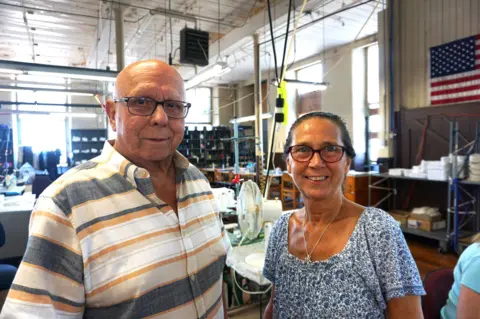
In a corner of a cavernous 1890s factory in southern Massachusetts, 15 people are bent over sewing machines, churning out specialty, hospital-grade neonatal gear. They are all that remain of what was once a much bigger manufacturing operation, most of which the Teixeira family shut down in 1990, reinventing their business as a largely warehousing and distribution company.Since US President Donald Trump started rolling out sweeping tariffs, the Teixeiras have been fielding more inquiries from companies newly interested in their US-based sewing services. But they have turned down those offers, deterred by the difficulty of hiring amid an immigration crackdown and doubts that the demand will be sustained.It's an indication that achieving the manufacturing revival promised by the president is likely to be far more difficult than the White House has claimed. It's just not going to happen, said Frank Teixeira, who joined the family business in the 1970s and oversaw its dismantling and reinvention as Accurate Services Inc. Tariffs are a bad policy and eventually are going to come home to haunt us.Trump campaigned on the promise of a better economy engineered in part by tariffs that he said would lower costs and usher in a new golden age. However, experts warn that the tariffs, which are taxes on imports, would raise prices for American businesses and consumers and slow growth, particularly for manufacturers reliant on imported supplies.Now nine months into Trump’s presidency and with tariffs taking hold, the gap between Trump's rhetoric and the reality on the ground in places like Fall River is widening. Employment growth in the US has notably slowed this year, with manufacturing jobs seeing declines. Business surveys indicate that manufacturing activity is contracting, and a significant number of manufacturers have reported negative impacts from the tariffs, which have raised costs and hurt profits.At Matouk, a local maker of high-end bedding, the tariffs have added significant costs, forcing the company to cut investments and raise prices, countering any potential benefits from the tariffs. George Matouk, the owner, has expressed frustration at being penalized despite efforts to invest in US manufacturing.The community remains hopeful but cautious as local Trump supporters express a willingness to wait. Tom Teixeira, a retired worker and Trump supporter, reflected, A year from now, if things aren't cheaper, we'll see.\