In brief
Greenlanders are bracing for talks hosted by US Vice President JD Vance, focusing on the future of the strategic island of Greenland. With global powers vying for influence, residents voice their worries over sovereignty, independence, and the potential for militarization of their homeland. Amidst a geopolitical crisis, they emphasize their desire for self-determination over being a pawn in US-Denmark relations.
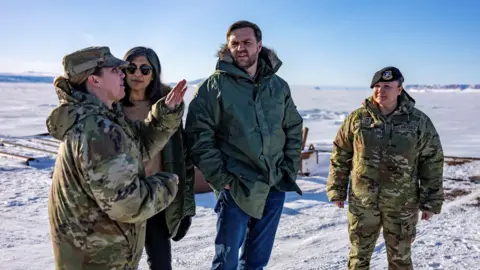
It's crunch time. The US Vice President, JD Vance, is hosting the Danish and Greenlandic foreign ministers, as well as their US counterpart, Marco Rubio, in the White House on Wednesday. The focus of the talks: the future of the world's biggest island, Greenland. A large digital news ticker tape runs above the snow-covered shopping mall in Nuuk, the island's capital, displaying the words 'Trump', 'Greenland', and 'sovereignty' repeatedly. Donald Trump has previously stated his desire for Greenland, saying he’ll take it 'the easy way or the hard way'. After his recent military actions, Greenlanders are taking him seriously. Anxiously counting down to the Washington meeting, locals express feelings of unease. 'I encourage Trump to use his ears wisely—to listen more and speak less. Our country is not for sale,' says Amelie Zeeb, emphasizing their aspiration for independence. Inuit artist Sivnîssoq Rask shares similar sentiments, voicing hopes for a well-managed independent future. As international attention on Greenland sharpens, talks at the White House represent only a part of broader tensions, including the political stakes between Nato nations Denmark and the US over Greenland's strategic value. Amidst fears of militarization and forced control, Greenlanders assert their need for autonomy from both US and Danish oversight, complicating the geopolitical landscape and raising profound questions about national identity and future security. The outcome of the talks will not only define Greenland's relationship with the US but could also reshape transatlantic alliances as Europe seeks to secure its own interests in a rapidly changing Arctic environment.