In brief
At Leipzig/Halle airport a drone loaded with an explosive device was found by staff near Ukrainian cargo planes. Police deployed a robot to remove the detonator and carried out a controlled explosion. German officials warned that the incident signals a professional, hybrid threat that may involve foreign powers. The incident comes amid a series of suspicious drone and parcel attacks across Europe, all raising alarm about potential Russian involvement.
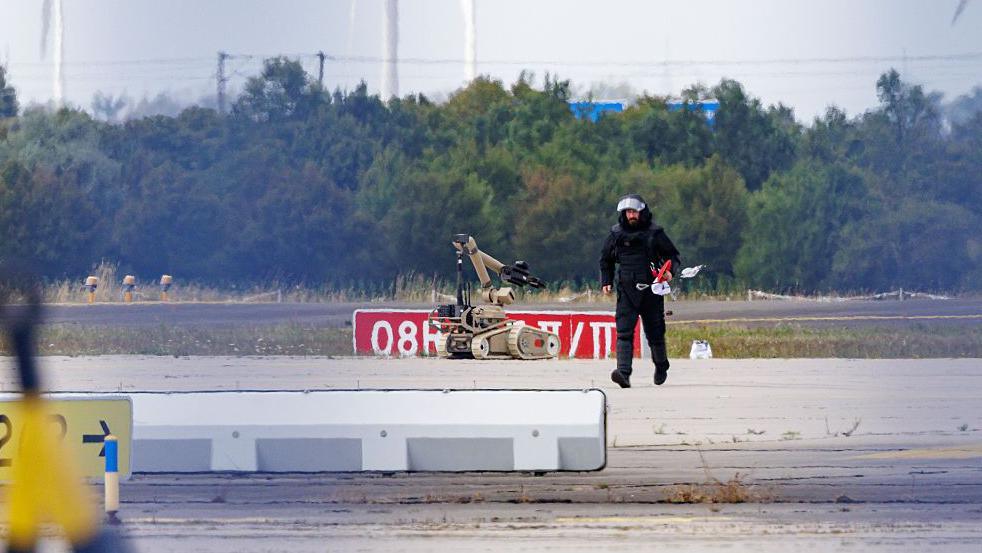
German police say a drone carrying a potential explosive device was spotted overnight near parked Antonov cargo aircraft at Leipzig/Halle Airport. The drone, early Thursday morning, prompted authorities to deploy a specialised robot to extract a detonator and keep the site safe.
The station’s safety team, alerted by a circuit‑breaker watch, were able to locate the device and bring it back to the control tower alongside a second, unidentified object that briefly collided with cargo planes and landed safely in Hanover with only minor damage.
Germany’s interior minister cautioned that the discovery reflects a "new level of threat", adding that the situation does not point to an amateurish approach but a professional, hybrid threat that they will continue to address. The minister hinted that competition among foreign powers could be involved, though no suspects have been named yet.
Leipzig/Halle is used by NATO allies for military logistics and serves as a base for Ukraine’s Antonov Airlines, transporting the bulk of Ukrainian aerial cargo. It also supports major courier services, an aspect that has attracted previous sabotage attempts. A parcel blaze occurred earlier this year when a DHL cargo locker ignited after being loaded onto a plane.
The German authorities removed the detonator and later detonated the remaining device in a controlled environment. Flights resumed on the northern runway at 01:55 local time, while the southern runway remains closed pending further checks.
Ukrainian Ambassador to Germany Oleksii Makeiev, speaking to a German broadcaster, implied that the drone could be linked to Russian forces. This assertion was not confirmed by Russian officials, who have denied any involvement in these acts.
Security experts have linked such incidents to the ongoing drone war that expanded to Germany after Russia’s 2026 invasion of Ukraine. They note a pattern of harmful drone and parcel activity targeting European airports and logistic hubs, indicating a persistent threat avenue that has previously aimed at the UK and EU countries.
The complexities surrounding these cases highlight the need for heightened surveillance and robust security protocols at international airports, especially those serving strategic military and civilian logistics.