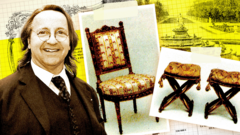
In the early 2010s, the French antiques market witnessed the emergence of two lavish chairs that were alleged to have graced the grounds of the illustrious Palace of Versailles. These opulent seats, believed to be among the rarest creations for Marie Antoinette, were branded with the mark of Nicolas-Quinibert Foliot, a renowned cabinet maker active in 18th Century Paris. Deemed "national treasures" by the French government in 2013 at Versailles's behest, the palace displayed interest in acquiring these artifacts but ultimately deemed the asking price excessive. As a result, they were sold to Qatari Prince Mohammed bin Hamad Al Thani for a staggering €2 million (£1.67 million).
Since then, numerous 18th Century royal furniture pieces, including other chairs from notable historical figures, have surfaced in the market. Despite many of them being purchased by Versailles to add to their museum collection, a significant scandal erupted in 2016, unveiling that these prized chairs were all forgeries. The controversy implicated Georges Pallot, a foremost antiques expert, and master cabinetmaker Bruno Desnoues, both facing legal action over charges of fraud and money laundering after a lengthy nine-year investigation.
The investigative saga also encompassed Galerie Kraemer and its director, Laurent Kraemer, who were accused of gross negligence in endorsing the forged chairs—claims they vehemently deny. Ahead of their court appearance set for Wednesday in Pontoise, both Pallot and Desnoues have admitted to their fraudulent activities, whereas Kraemer defends against accusations of negligence.
What began as a "joke" back in 2007 between Pallot and Desnoues spiraled into a complex scheme to replicate authentic royal chairs, fooling other experts, galleries, and auction houses like Sotheby's. They sourced discounted wood, eked out aging techniques, and affixed counterfeit stamps from illustrious makers, leading to massive financial gains, with estimates suggesting profits reached more than €3 million.
Their deceit unravelled following scrutiny prompted by the extravagant lifestyle of a man related to the fraud, who detailed his involvement as a middleman. As the investigation into the cozy relations between palace experts and antiques sellers unfurled, prosecutors pressed on the evident need for more rigorous regulations within the art market.
Charges against certain middlemen were eventually dropped, but both Kraemer and his gallery remain defendants, accused of negligence for their insufficient verification processes preceding sales. While prosecutors argue that the gallery exploited its connections and reputation for verification, the defense insists they were also victims of the deception.
The fallout from this scandal poses crucial implications for the reliability of art transactions and the credentials of those within the high-stakes realm of antique collecting. As the legal proceedings continue, questions linger on how to safeguard against such widespread forgery in the future and uphold the integrity of historical artifacts.