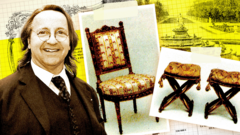
In the early 2010s, an extraordinary discovery rocked the French antiques scene when two ornately crafted chairs claimed to have belonged to the Palace of Versailles emerged. These chairs were believed to be among the priciest ever made for Marie Antoinette, the last queen of France, and boasted the mark of renowned Parisian carpenter Nicolas-Quinibert Foliot from the 1700s. Deemed "national treasures" by the French government in 2013 due to Versailles' interest in acquiring them, the chairs were ultimately sold to Qatari Prince Mohammed bin Hamad Al Thani for an astounding €2m (£1.67m).
The sale was part of a larger influx of 18th-century royal furniture appearing on the market, with additional pieces thought to be associated with French aristocracy, including items tied to King Louis XVI's family. However, a major scandal erupted in 2016 when it was revealed that these celebrated chairs were all forgeries. A prolonged investigation led to the arrest and trial of notable figures, including antiques expert Georges "Bill" Pallot and award-winning cabinetmaker Bruno Desnoues, both facing charges of fraud and money laundering.
The scheme, which started as a “joke” between Pallot and Desnoues, involved replicating authentic pieces to the point where they fooled experts and collectors alike. Pallot, a recognized authority on French 18th-century furniture, used his knowledge and access to Versailles' archives to devise a scheme for creating fakes. Desnoues, with his impressive restoration credentials, aided in crafting these replicas which then passed through various galleries before reaching high-end auction houses.
Prosecutors allege the duo made upwards of €3m in profits, while they claimed a lower figure of €700,000. The fraudulent operation came to light when authorities noted the suspiciously affluent lifestyle of a middleman associated with the sale of the fraudulent items.
While initially some middlemen faced dropped charges, others, including gallery owner Laurent Kraemer, remained under scrutiny for negligence in verifying the legitimacy of these star pieces prior to resale. Kraemer maintains that his gallery was a victim, arguing they were misled rather than complicit in the fraud.
This high-profile case not only jeopardized the reputation of the involved parties but also illuminated the urgent need for stronger regulations in the antiques market, as highlighted by prosecutor Pascal Rayer. The scandal serves as a reminder of the complexities surrounding art authenticity and the vulnerability of even renowned institutions in the face of deception.