In brief
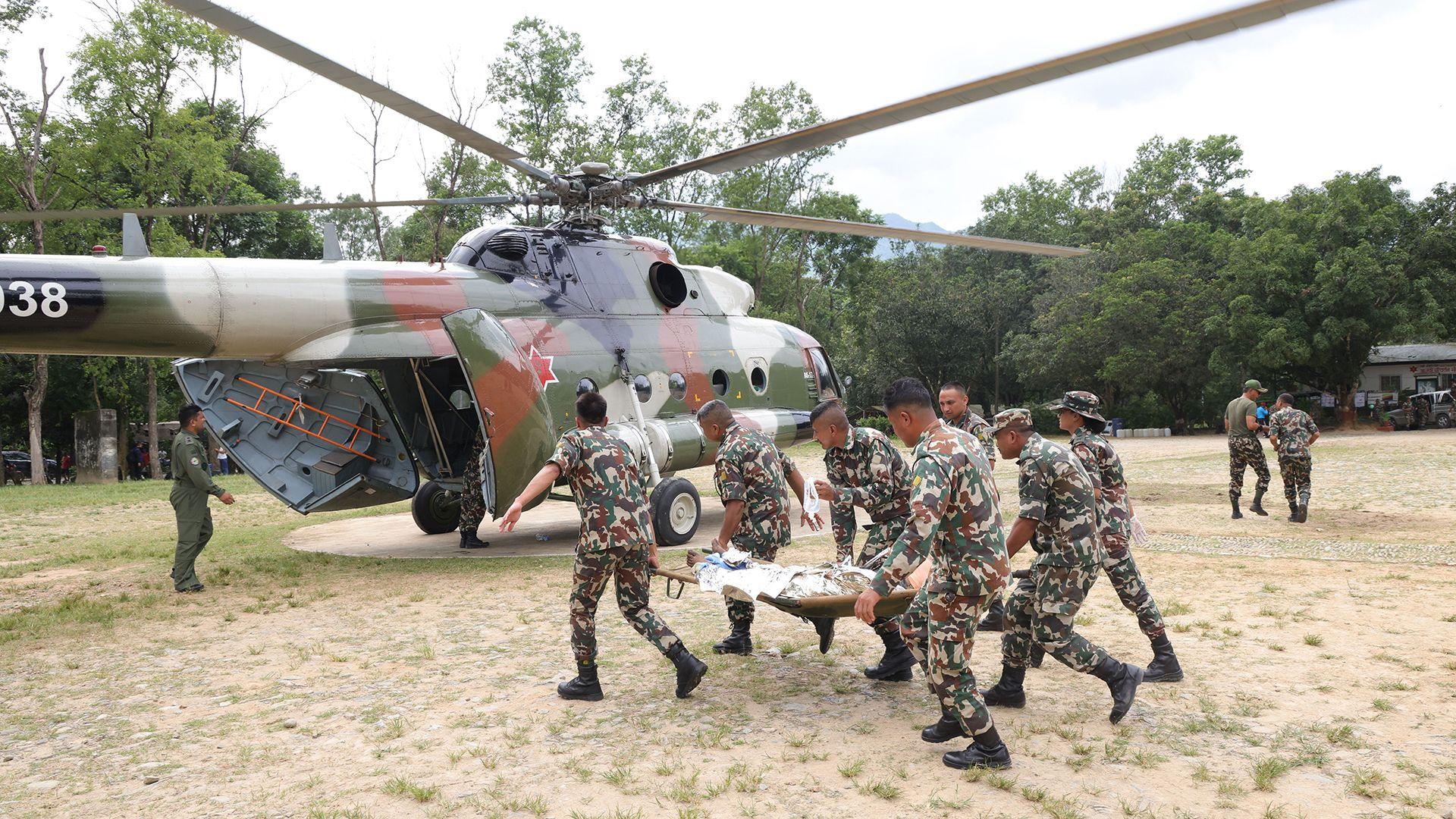
Heavy downpours and a sudden collapse of a glacier set off a chain of landslides and flash floods along the Nepal‑Tibet border, killing at least 475 people and leaving more than 900 missing. Nepal and China’s governments, along with India, the United States, the United Kingdom and other countries, have pledged aid and deployed search teams to the devastated region. Early‑warning systems are being upgraded as experts warn of possible secondary flooding from blocked river sections. International rescue efforts remain in progress, with the humanitarian response growing as fresh satellite imagery and ground data provide new insights.
A sudden glacial collapse on the high alpine frontier between Nepal and Tibet unleashed massive landslides that left hundreds of people dead or missing. The event began on Wednesday, when a glacier in the upper Himalayas broke apart, dumping ice, rock and water into the valley and striking nearby communities.
What caused the deadly landslide?
U.S. Geological Survey experts said the disaster was the result of a glacial collapse, not an earthquake. The collapse generated a shockwave that registered a 5.2 magnitude on the Richter scale, causing instant flooding downstream.
Casualty figures so far
Local police reported at least 475 deaths, with 910 people still missing. Among the missing are 517 foreigners, 44 members of the Nepali army and 28 police officers. The tourism board added that 644 tourists remain missing, including 33 British nationals.
Missing tourists by country
Foreigners reported missing include: 288 from India, 100 from China, 65 from the United States, 53 from Ukraine, 51 from Malaysia, 39 from Australia, 33 from the United Kingdom, and 24 from Canada. Smaller groups from South Korea, South Africa, Portugal, the Netherlands and New Zealand are also feared lost.
Government responses
The Nepali prime minister said the nation was deeply shocked and will coordinate with Chinese officials to manage the crisis. President Xi Jinping urged complete search operations and committed to stronger early‑warning systems. Modi in India offered humanitarian aid, and the UN’s Guterres warned against another flood downstream. The United States pledged $500,000 for emergency supplies, while the UK allocated £5m for relief and for rescued British nationals.
Rebuilds and secondary flood forecasts are now feared as debris entered major rivers such as the Trishuli, Bhote Koshi and Narayani. Rescue teams have paused at some sites after a rising lake burst again, stressing the urgent need for monitoring.