In brief
A 7.4 magnitude earthquake struck near Ternate, Indonesia, resulting in one death and damage to various buildings. The quake, which occurred at a depth of 35 kilometers, triggered tsunami warnings that were later rescinded. Residents described the tremors as among the strongest experienced in recent years.
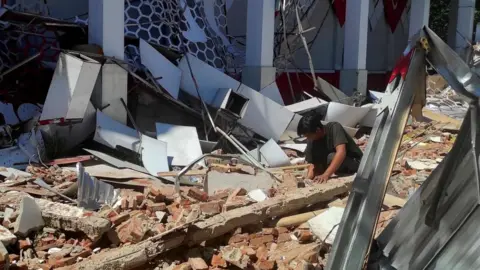
A powerful 7.4-magnitude earthquake struck the Molucca Sea off Indonesia's Ternate island early Thursday, claiming at least one life. The earthquake jolted at 06:48 local time (22:48 GMT) at a depth of 35 kilometers, triggering tsunami warnings that were quickly rescinded.A 70-year-old woman in North Sulawesi died after being crushed by falling debris. Another person sustained injuries after jumping off a building in panic. Although the region is known for its seismic activity, residents reported this quake as one of the strongest they have felt in years.Initially, the Hawaii-based Pacific Tsunami Warning Center indicated that tsunami waves under 0.3 meters were a possibility along the coasts of several countries, including Guam and the Philippines, but the alert was lifted two hours later.Journalists and residents shared their experiences of the quake; furniture shook for several seconds, and many people rushed outside into a scene of chaos. In Ternate, some houses vibrated intensely, leading residents to flee in confusion. Eyewitnesses reported power outages, and school evacuations were implemented as fears of aftershocks loomed.This earthquake was succeeded by two more significant aftershocks, with magnitudes of 5.5 and 5.2, causing further alarm among the populace. Indonesia's national geological agency reported various instances of building damage but did not provide detailed statistics immediately after.Video footage showed rescue teams navigating through rubble, while patients and staff evacuated from a nearby hospital, underscoring the urgency and fear triggered by the seismic event. The epicenter of the tremor was approximately halfway between the cities of Manado and Ternate. Residents remain on high alert for potential aftershocks.