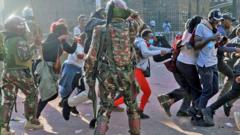
The tragic events surrounding the violent dispersal of protests in Kenya's capital last June have come under intense scrutiny following a BBC Africa Eye documentary. The piece revealed disturbing evidence of security forces, including police and military personnel, firing upon unarmed protesters during demonstrations against a controversial finance bill. As calls for a formal investigation grow, different factions within the Kenyan government and society grapple with accountability and the implications of the media's portrayal of events.
The protests on June 25, 2024, against a proposed tax increase intended to raise $2.7 billion were marred by violence, resulting in at least three confirmed fatalities among protesters. Following the documentary's release, major human rights organizations, including Amnesty International and the Kenya Human Rights Commission (KHRC), have vocally supported calls for thorough investigations, arguing that those implicated in the killings must face legal action.
Despite the government's spokesman acknowledging these concerns, he criticized the BBC documentary as lacking balance, claiming it overlooked some of the chaos instigated during the protests. Frontline voices in Kenya's parliament echoed this sentiment, with some legislators accusing the BBC of promoting a foreign agenda while others called for sober action regarding the protests' aftermath.
As the tension continues, the IPOA, Kenya's police watchdog, has confirmed it is investigating dozens of deaths related to the protests and has begun reviewing significant cases. However, human rights advocates feel the inquiry's pace is unsatisfactory given the reports of unnecessary force used against civilians.
The documentary has unleashed a wave of anger among Kenyan youth, many of whom have taken to social media to demand justice. Despite the government's previous denial of wrongdoing, public sentiment is increasingly directed against police and army personnel who have been linked to the violence.
In this atmosphere of unrest, disturbing revelations and mounting pressure for accountability are stirring a national debate around government response to dissent in Kenya and the quest for justice in the wake of tragedy.
The protests on June 25, 2024, against a proposed tax increase intended to raise $2.7 billion were marred by violence, resulting in at least three confirmed fatalities among protesters. Following the documentary's release, major human rights organizations, including Amnesty International and the Kenya Human Rights Commission (KHRC), have vocally supported calls for thorough investigations, arguing that those implicated in the killings must face legal action.
Despite the government's spokesman acknowledging these concerns, he criticized the BBC documentary as lacking balance, claiming it overlooked some of the chaos instigated during the protests. Frontline voices in Kenya's parliament echoed this sentiment, with some legislators accusing the BBC of promoting a foreign agenda while others called for sober action regarding the protests' aftermath.
As the tension continues, the IPOA, Kenya's police watchdog, has confirmed it is investigating dozens of deaths related to the protests and has begun reviewing significant cases. However, human rights advocates feel the inquiry's pace is unsatisfactory given the reports of unnecessary force used against civilians.
The documentary has unleashed a wave of anger among Kenyan youth, many of whom have taken to social media to demand justice. Despite the government's previous denial of wrongdoing, public sentiment is increasingly directed against police and army personnel who have been linked to the violence.
In this atmosphere of unrest, disturbing revelations and mounting pressure for accountability are stirring a national debate around government response to dissent in Kenya and the quest for justice in the wake of tragedy.