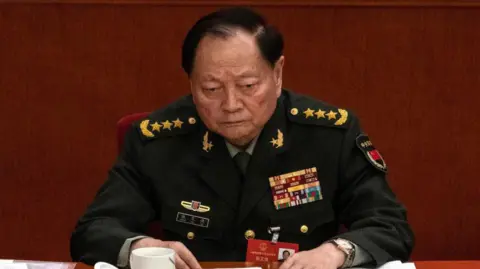
The senior ranks of the People's Liberation Army (PLA) are in tatters following the weekend purging of top general Zhang Youxia and another senior officer, Gen Liu Zhenli. This significant shakeup has raised serious questions regarding elite power struggles within the Communist Party, particularly regarding China's military capabilities and ambitions.
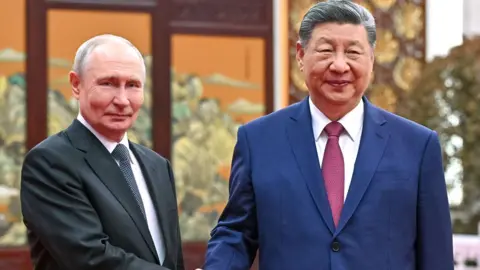
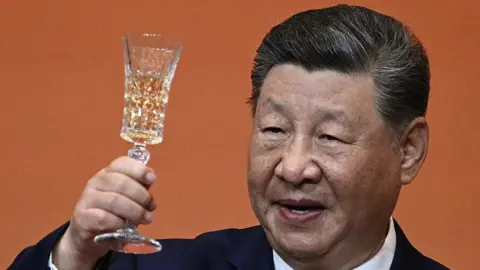
Zhang, aged 75, served as the vice-chairman of the Central Military Commission (CMC), which controls the armed forces. Traditionally composed of around seven members, the CMC has now dwindled to just two: President Xi Jinping and Gen Zhang Shengmin. This departure of senior generals has led experts to voice concerns about the potential implications for China's warfighting capacity, especially regarding its stance on Taiwan.
Analysts highlight the unprecedented situation where only Xi and one general remain in command, which is viewed as a severe leadership void for the PLA. Lyle Morris of the Asia Society Policy Institute remarked, The PLA is in disarray, indicating a potential crisis in military leadership.
The official narrative attributes the investigation of Zhang and Liu to serious violations of discipline and law, a term often synonymous with corruption in Beijing. The editorial from the PLA Daily reflects a hardline approach, emphasizing a zero-tolerance policy for corruption, irrespective of high-ranking positions.
Speculation surrounding Zhang's removal has run rampant, suggesting motives ranging from leaking sensitive information to outright power struggles within military factions. Chong Ja Ian from the National University of Singapore pointed out a climate of uncertainty exacerbated by a lack of clear information disseminated from the capital.
Despite Xi Jinping's efforts to consolidate power through anti-corruption measures, analysts warn this may lead to caution among military decision-makers, undermining operational effectiveness. The leadership upheaval raises fears of a drop in military morale and decision-making capability.
Furthermore, the purge could influence China's strategic posture towards Taiwan, with experts unsure whether the reduced leadership will hamper ambitions. Nonetheless, comparisons indicate that decisions regarding military confrontations will increasingly hinge on Xi's preferences.
The fallout from the recent purges, coupled with ongoing tensions in the region, guarantees a tumultuous atmosphere within Chinese military ranks as personnel grapple with uncertainty over their own positions.