In brief
The Ngogo chimpanzees, known for their previous close-knit community, have been embroiled in violent conflict for the past eight years, resulting in numerous fatalities, including infants. Researchers are examining factors behind this shift in behavior, suggesting implications for understanding human conflict.
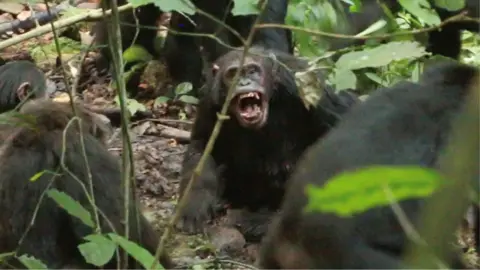
The world's largest known group of wild chimpanzees has split and been locked in a vicious civil war for the last eight years, according to researchers. It is not clear exactly why the once close-knit community of Ngogo chimpanzees at Uganda's Kibale National Park are at loggerheads, but since 2018 the scientists have recorded 24 killings, including 17 infants.These were chimps that would hold hands, lead author Aaron Sandel said. Now they're trying to kill each other. The study, published in the journal Science, indicates that the intensity and duration of the violence may inform how early human conflict developed.Sandel, an anthropologist from the University of Texas in the US and co-director of the Ngogo Chimpanzee Project, explained that chimpanzees are very territorial, experiencing hostile interactions with those from other groups. He noted, [It's] like a fear of strangers. Over decades, the approximately 200 Ngogo chimpanzees had lived in harmony but began polarizing in June 2015, leading to a period of avoidance and aggression between two newly formed subgroups.The violence has escalated since their separation in 2018, with reports of targeted attacks leading to significant fatalities. The study identifies multiple factors, including social dynamics and resource competition, as possible catalysts for this drastic change.Researchers are calling for a reevaluation of our understanding of conflict, arguing that these observations among Ngogo chimpanzees may shed light on the primitive roots of human warfare. The findings serve as a stark reminder that social and relational dynamics can heavily influence conflict, independent of constructs like religion and politics.