In brief
Blue Origin's New Glenn rocket had a successful launch on Thursday from Cape Canaveral, Florida, delivering NASA's twin Mars orbiters, Escapade. This marks only the second flight of New Glenn, a vital component in future crewed lunar missions and ongoing Mars exploration. Following liftoff, the reusable booster was recovered successfully, a key advancement for cost-effective space travel. The twin orbiters will study Mars' upper atmosphere and magnetic fields to better understand the planet's transformation and the challenges of protecting future astronauts.
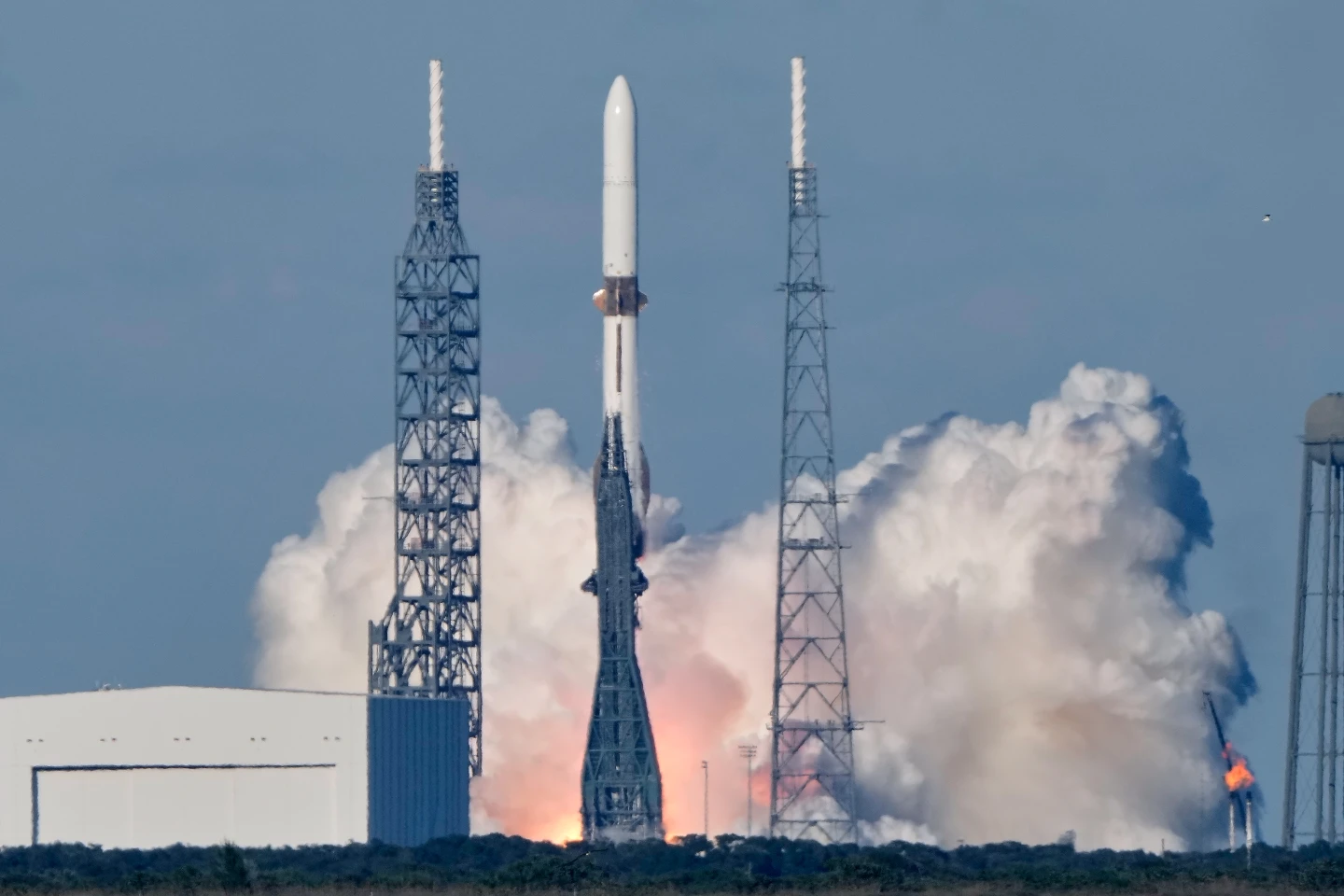
CAPE CANAVERAL, Fla. — Blue Origin's New Glenn rocket launched on Thursday, successfully carrying NASA's twin Mars orbiters, Escapade. This launch is a pivotal step in both lunar and Mars exploration efforts, showcasing NASA's reliance on private space companies to enhance its missions.
The 321-foot (98-meter) rocket lifted off from Cape Canaveral Space Force Station following a four-day delay due to poor weather and solar storms. Once in flight, New Glenn’s reusable booster was successfully recovered aboard a barge 375 miles offshore, a significant advancement for cost-effective space missions.
“Next stop, moon!” cheered Blue Origin employees as they celebrated the successful booster landing, an improvement compared to the rocket's inaugural flight which failed to recover the booster.
The identical Mars orbiters, named Escapade, are scheduled to spend a year near Earth, stationed 1 million miles away. They will later get a gravity assist from Earth to reach Mars, aiming to arrive by 2027. Their mission is to map the Martian upper atmosphere and magnetic fields, contributing valuable data about the planet's history and conditions.
Lead scientist Rob Lillis emphasized the mission's importance in understanding solar wind interactions with Mars. He stated, “Escapade is going to bring an unprecedented stereo viewpoint because we’re going to have two spacecraft at the same time.”
This relatively low-budget mission is managed by UC Berkeley, costing under $80 million. NASA's decision to schedule this flight reflects its ongoing partnership with Blue Origin amidst intense competition in lunar exploration from other private companies like SpaceX.
New Glenn is designed to support a variety of missions—including the upcoming launch of a lunar lander for NASA's Artemis program. As the space race intensifies, Blue Origin aims to solidify its role in the future of space travel.