In brief
In the wake of a 7.4‑magnitude earthquake that struck Colombia on August 10, the city of Cali was left with shattered buildings and a grieving population. Torres del Limonar collapsed, trapping many inside and becoming a stark symbol of the disaster. Efraín Gallego’s brother lies under the rubble—an 80‑year‑old man still considered possibly alive, his family’s emotions turning toward fragile hope with every shout of rescue teams. Local volunteers and military personnel, guided by curfews, work tirelessly to dig through fallen concrete, with at least 25 people still feared trapped and 95 confirmed dead across the city. The story underscores the resilience of citizens and the enduring uncertainty of survival in the aftermath of the quake.
The magnitude 7.4 earthquake that struck Colombia on Monday, August 10, was the most powerful of the century, leaving the city of Cali with whole buildings reduced to rubble.
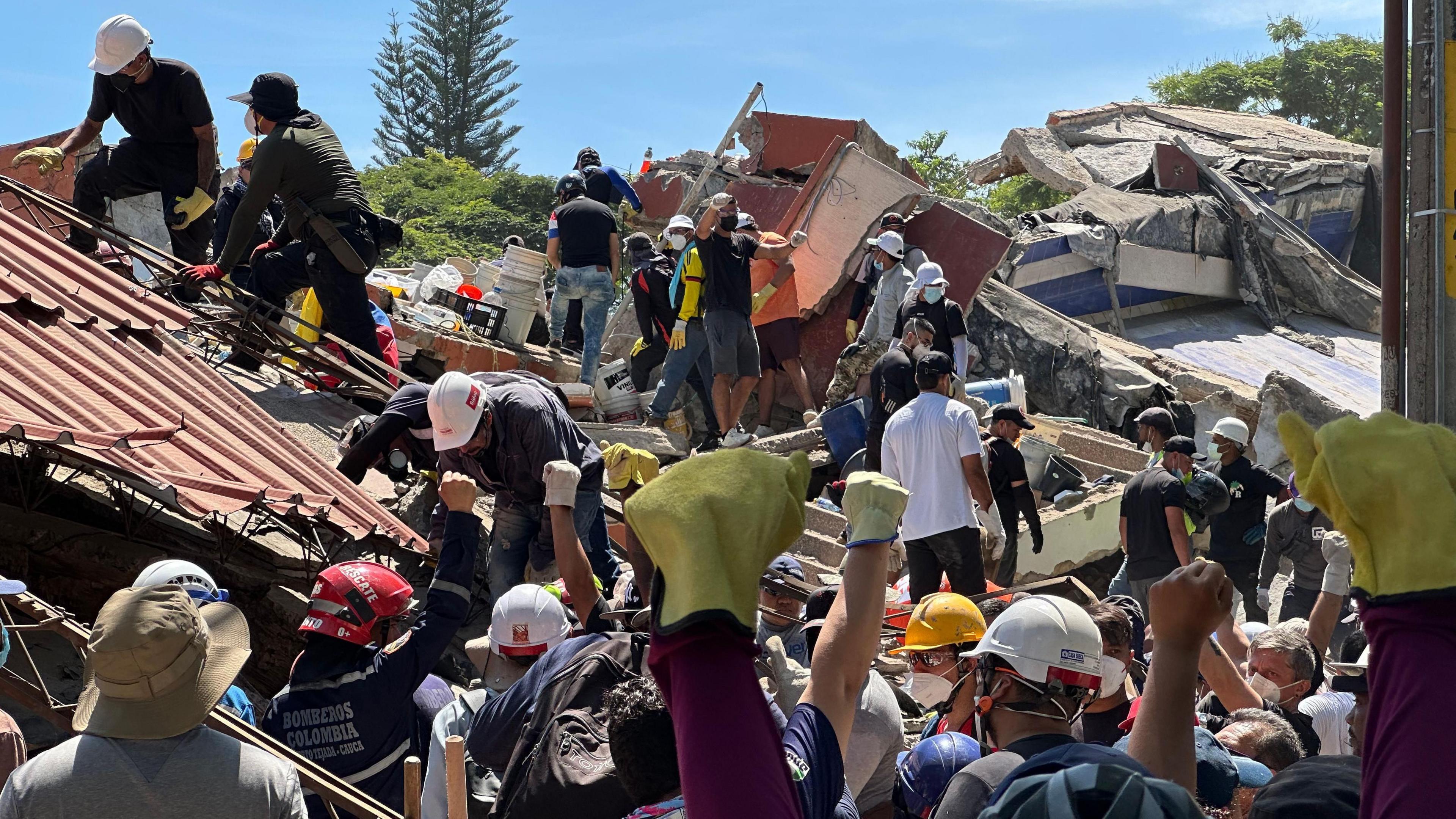
The four‑storey Torres del Limonar collapsed, burying its tenants—including 80‑year‑old Mr. Efraín Gallego’s brother—inside a jagged mound of concrete, mattresses, and furniture.
Efraín Gallego, who reached out to the local media, describes the crushing silence that turns into broken‑hearted hope whenever rescue workers shout “silence! If you can hear us, shout or make any noise,” only to hear nothing in return.
Since the collapse, more than 100 volunteers, firefighters, paramedics, military personnel and journalists have converged on the debris. Mayor Alejandro Éder imposed a nighttime curfew to expedite the operation, and by the first night, rescuers believed they had pulled out ten survivors.
Local sources indicate at least two people were detected alive with the help of tunnels, yet no contact has been made with Mr. Gallego’s brother, who remains a likely victim of the earth‑shake.
Beyond the harrowing trek to bring out survivors, the crisis has galvanized ordinary citizens. One young volunteer, Alejandro Mahecha, explains he joined the front lines after seeing the staggering damage in his hometown, helping to move rubble, pour water, and clear roads.
The impact of the quake extends beyond the rubble: families sleep on makeshift sofas, neighbors gather for support, and the heavy scent of burning remains in the air, amplifying the intrepid spirit of volunteers and survivors alike.
Despite the bleak situation, rescue teams keep pushing—removing debris with handsaws and shovels, and making new tunnel cuts in hopes of freeing more trapped lives. Only time will tell how many will ultimately be saved, but the steadfast resolve of the community remains unbroken.