In brief
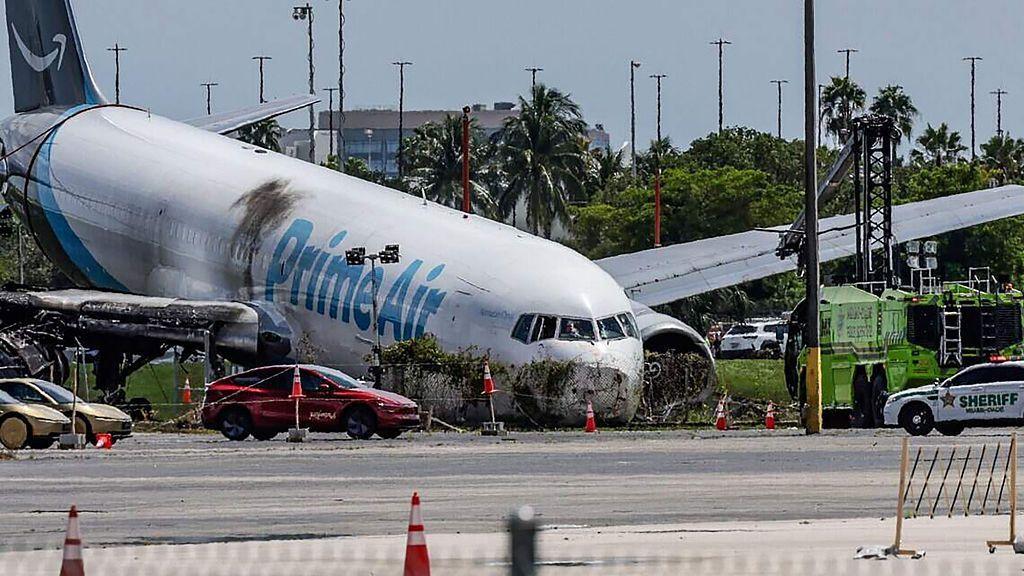
A Boeing 767-300 piloted by Amazon Prime Air crashed at Miami International Airport after overshooting the runway at high speed. Flight data released by the NTSB shows the pilot repeatedly warned his crewmate of excessive speed, yet reception was inconsistent. Electro‑mechanical alerts such as "sink rate" and "too low terrain" were triggered just before impact. The crash, which killed five crew members, has prompted investigators to probe the cause of the high speed and delayed flap deployment. The incident will shape future cargo‑plane safety protocols.
Amazon Plane Overshoots Miami Runway After Speed Warning
A pilot aboard Amazon Prime Air flight 7598 warned crew members that the Boeing 767‑300 had gone too fast during its approach to Miami’s runway. Flight data later released by the U.S. National Transportation Safety Board (NTSB) confirms that the crew repeatedly sounded an alarm at a landing speed of 158 knots (292 km/h), a figure on the higher side for that aircraft.
The pilot’s assertion of “excessive speed” was met with an inconsistent verbal response from the cockpit partner, according to the cockpit voice recorder. An electronic alarm sounding an “sink‑rate” warning and a “too low terrain” alert were also logged in the final minutes before the accident.
The aircraft missed the runway entirely, collided with a Ford van and several nearby vehicles, broke through a perimeter fence, and came to rest roughly 1,300 ft (394 m) beyond the departure point. Two remains for the five fatalities, all members of a cleaning crew, were identified as Rolando Aleman Leon, 55; Yoel Rodriguez Naranjo, 53; Julio C Pineda, 75; Carlos Acosta Fajardo, 53; and Javierkys Reyes Quevedo, 47.
Aviation attorney Pablo Rojas said that the late flap deployment, which should have slowed the plane, might reflect the crew’s reaction to the speed issue. He added that the NTSB’s report “confirms that this was, in a way, a doomed approach.”
The NTSB continues to investigate the cause of the overrun and deadly crash, which killed five and injured five others. The incident underscores the importance of adherence to speed limits and pilot communication protocols in cargo aviation.