In brief
During a recent visit to Greenland, US Vice-President JD Vance emphasized the urgency of addressing security threats from China and the need for Greenland to rethink its alliances. Meanwhile, locals celebrated a new coalition government focused on independence from Denmark, reflecting their desire for cultural respect and self-determination amid Vance's assertive messaging.
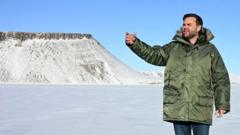
In Nuuk, believers in the northern lights bore witness to a day when Greenland's future appeared uncertain under the brief, yet impactful visit of US Vice-President JD Vance. His presence underscored alarming foreign policy tensions, presenting an unwelcome proposition regarding the island's autonomy. Vance's remarks provided an unsettling mixture of diplomacy and dominance, suggesting that Greenland must abandon its perceived outmoded allegiance to Denmark in favor of safeguarding its rich resources through a partnership with the United States. "We do not think that military force is ever going to be necessary," Vance reassured troops at a US military base, though his underlying message pointed towards an urgent need for Greenland to acknowledge and respond to the growing influence of China in the Arctic region.With the north pole nestled in the center of a global map, Greenland transforms into a strategic battleground amidst a tug-of-war for power and resources. The vice president's direct challenge to the Danish government, represented by Prime Minister Mette Frederiksen's swift rebuttal, reflected serious concerns about America's shifting diplomatic focus away from established alliances.Conversely, in Greenland's capital, Nuuk, a celebratory atmosphere filled the air as locals gathered to mark the formation of a new government. The community's emphasis was centered on unity, Inuit culture, and the importance of being treated with dignity amid potential political storms. The prevailing sentiment captured by local artist Lisbeth Karline Poulsen echoed a widespread reluctance towards assimilation with the US, as only 6% of Greenland’s population appeared in favor of such a shift.Swayed by the concept of independence, the new coalition government aims for a transcendent path towards self-determination from Denmark, deeming exploration of such options essential while also mindful of outside influences that could disrupt their sovereignty. In what seemed to be an attempt to ease the unease, Vance remarked on America's support for Greenland's aspirations, emphasizing that the intention lies in offering protection rather than pursuing territorial acquisition. Despite a historical treaty granting the US military access, many Greenlandic residents felt the heavy hand of Washington’s demands and dreaded the prospect of feeling coerced.Ultimately, JD Vance’s visit shed light on the complexities of US-Greenland relations, a narrative that continues to unfold amid military strategies, exploration, and the island’s progress towards autonomy. Locals remain keen to engage with American businesses while simultaneously advocating for a balanced and patient dialogue rather than an imposing posture from officials.