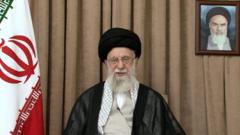
Iran's supreme leader, Ayatollah Ali Khamenei, addressed the nation for the first time since a ceasefire with Israel was established, stating that the US "gained no achievements" from their military strikes against Iranian nuclear sites. He insisted that these actions did not significantly disrupt Iran's nuclear program and referred to Iran's retaliation against a US air base in Qatar as delivering a "heavy blow." As the US maintains that its strikes severely impaired Iran's nuclear capabilities, Defense Secretary Pete Hegseth announced that intelligence from both the US and Israel affirmed the operation's success.
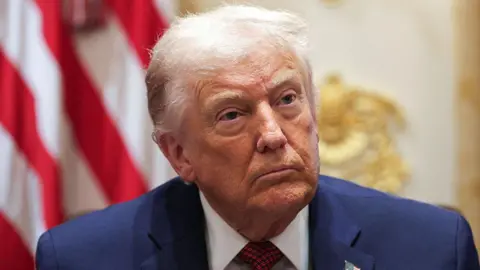
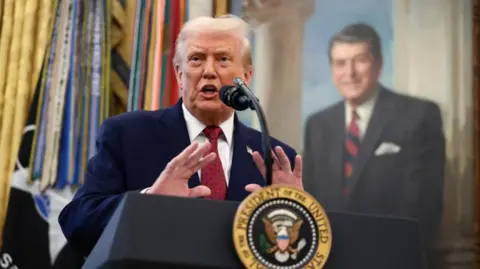
President Trump echoed this sentiment, labeling the strikes "total obliteration" of three critical nuclear sites and reacted strongly to reports suggesting the damage could be less extensive than anticipated. During a vigorous press briefing alongside General Dan Caine, Hegseth asserted that the mission rendered Iran’s enrichment facilities inoperable.
Khamenei’s address followed a period of public absence, during which he reportedly sheltered in a secured location as tensions escalated following Israeli Prime Minister Netanyahu's warning about Iran's nuclear capabilities. The supreme leader hinted at future strikes against US installations in the region should Iran face additional aggression and characterized the US strikes as exaggerated failures.
In legislative developments, Iran's parliament approved a bill halting cooperation with the International Atomic Energy Agency (IAEA), withdrawing its commitment to nuclear inspections, further escalating concerns over transparency regarding its nuclear program. Iran contends its nuclear endeavors are exclusively for civilian purposes, maintaining it has never sought nuclear weapons.
Over the course of recent air assaults, sources cited over 600 casualties reported by Iran against 28 fatalities on the Israeli side, alongside rising tensions after the US intervened in the conflict. The unfolding situation reveals a precarious balance of power, with both nations on edge amidst an uncertain ceasefire.
President Trump echoed this sentiment, labeling the strikes "total obliteration" of three critical nuclear sites and reacted strongly to reports suggesting the damage could be less extensive than anticipated. During a vigorous press briefing alongside General Dan Caine, Hegseth asserted that the mission rendered Iran’s enrichment facilities inoperable.
Khamenei’s address followed a period of public absence, during which he reportedly sheltered in a secured location as tensions escalated following Israeli Prime Minister Netanyahu's warning about Iran's nuclear capabilities. The supreme leader hinted at future strikes against US installations in the region should Iran face additional aggression and characterized the US strikes as exaggerated failures.
In legislative developments, Iran's parliament approved a bill halting cooperation with the International Atomic Energy Agency (IAEA), withdrawing its commitment to nuclear inspections, further escalating concerns over transparency regarding its nuclear program. Iran contends its nuclear endeavors are exclusively for civilian purposes, maintaining it has never sought nuclear weapons.
Over the course of recent air assaults, sources cited over 600 casualties reported by Iran against 28 fatalities on the Israeli side, alongside rising tensions after the US intervened in the conflict. The unfolding situation reveals a precarious balance of power, with both nations on edge amidst an uncertain ceasefire.