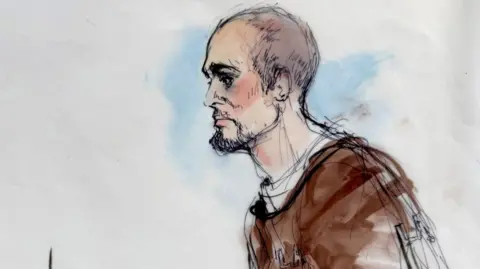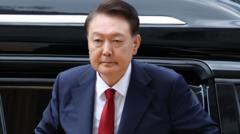
South Korea's former president Yoon Suk Yeol has been rearrested amidst a deepening political crisis linked to his controversial martial law bid from last year. Unfolding just an hour ago, this significant development comes in the wake of Yoon's impeachment in April, following a six-hour imposition of military rule in December that thrust the nation into turmoil. The Seoul Central District Court issued the arrest warrant based on concerns that Yoon may destroy critical evidence in his upcoming trial.
Yoon made history in January as the first sitting South Korean president to be arrested, a situation that arose after a dramatic confrontation with investigators which saw them scale barriers to execute the arrest. Initially, he was granted release two months later due to procedural irregularities, but is now facing renewed scrutiny. His latest court appearance included a seven-hour session during which special counsel presented allegations against him, including violations regarding cabinet member rights related to the martial law declaration.
Prosecutors reportedly possess evidence indicating that Yoon directed military drones over North Korea to provoke an event that would rationalize his martial law action. In addition to Yoon, several senior officials have been implicated, facing charges ranging from insurrection to abuse of power in connection with the martial law declaration. Notably, charges of insurrection are among a select few that South Korean presidents cannot contest while in office, but without presidential immunity, Yoon is now susceptible to a host of other criminal accusations.
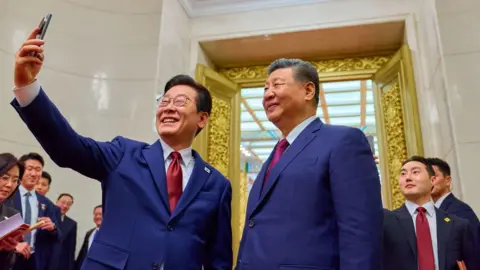
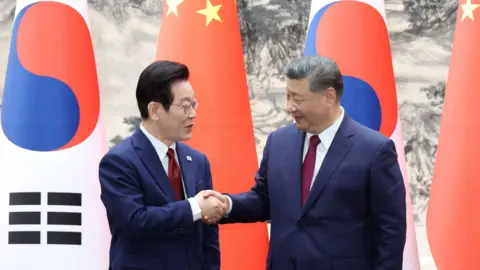
The political landscape has shifted significantly with the election of Lee Jae-myung, who campaigned on a promise to reinforce democracy in South Korea following the upheaval. Lee has initiated comprehensive investigations into Yoon's administration, underscoring a broader commitment to accountability amid a polarized political environment. As the situation evolves, the nation continues to navigate the ramifications of Yoon's presidency and the implications for its democratic institutions.