In brief
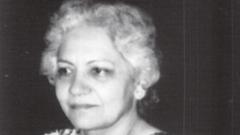
Dr. Sneh Bhargava, a trailblazing woman in Indian medicine, recalls the moment she encountered Prime Minister Indira Gandhi after her assassination. As AIIMS' first female director, she reflects on her extraordinary journey while advocating for women's empowerment in medicine.
Dr. Sneh Bhargava, a pioneering figure in Indian medicine, recently shared her memories of the chaotic day when Prime Minister Indira Gandhi was shot, marking a significant moment not just in her life but in Indian history as well. Appointed as the first female director of the All India Institute of Medical Sciences (AIIMS) in 1984, Dr. Bhargava's career is celebrated in her newly published memoir, *The Woman Who Ran AIIMS.*At 90, Dr. Bhargava, a distinguished radiologist, recounts the fateful morning of October 31, 1984, when she was called suddenly to the emergency ward, discovering a critically injured Indira Gandhi, whose life she instinctively sought to save. "My immediate thought was about protecting her," Bhargava recalls, her focus unwavering despite the chaos surrounding her, including fears of a mob gathering outside the hospital after Gandhi was shot by her bodyguards in retaliation for the controversial Operation Blue Star.Despite the gravity of the moment, Dr. Bhargava faced a daunting task. For hours, she and her team maintained the facade of trying to save the Prime Minister, even though she had already succumbed to her injuries upon arrival. "We were pretending to save her, while she was dead," she writes, highlighting the delicate political situation and her commitment to medicine.The memoir dives into various pivotal encounters throughout her career, portraying not just her resilience against political pressures but also her dedication to patient care amidst the demands of high-profile politics. Dr. Bhargava notably recollects moments with other political figures, such as visiting Sonia Gandhi when Rahul, her son, faced a minor injury, reflecting both her compassion and the human side of her profession.Dr. Bhargava's rise in a male-dominated field underscores her pioneering spirit. After studying radiology in London at a time when few women engaged in such professions, she returned to India, determined to enhance the country’s ailing healthcare system. She played a crucial role in establishing radiology as a vital part of medical diagnosis and pushed for improved equipment and training.Born in 1930 in Lahore, her childhood passion for medicine never waned, and she credits her family's support as essential in her journey. Advocating for future generations, Dr. Bhargava emphasizes the importance of parental support for daughters in breaking gender barriers in professional fields.As part of her ongoing contributions to the medical community, Dr. Bhargava continues to inspire, embodying a legacy of dedication, innovation, and empowerment in Indian healthcare. Her memoir serves as both a personal reflection and a call to action for future women in medicine: "Only with support can they truly break the glass ceilings," she asserts.