In brief
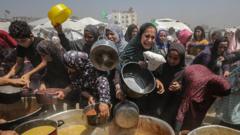
The Integrated Food Security Phase Classification (IPC) has warned that around 2.1 million people in Gaza are at critical risk of famine, with 244,000 experiencing catastrophic food insecurity. The situation has worsened since October 2024 due to a blockade on humanitarian aid and renewed violence.
A comprehensive assessment backed by the United Nations has raised alarming concerns regarding the humanitarian crisis in Gaza, indicating that its population of approximately 2.1 million Palestinians is facing a "critical risk" of famine amid extreme food insecurity. The report by the Integrated Food Security Phase Classification (IPC) reveals a significant deterioration in the food situation since October 2024, although it currently does not classify it as an active famine.Following a two-month ceasefire between Israel and Hamas, which had temporarily alleviated some suffering, the report indicates that renewed conflict and the Israeli blockade on humanitarian aid have dramatically reversed any progress. As a consequence, approximately 244,000 people in Gaza are experiencing "catastrophic" levels of food insecurity, and urgent interventions are required to avert the growing likelihood of famine.Since mid-March, Israel has intensified its military operations in Gaza and enforced a blockade preventing vital supplies of food, medicine, and other humanitarian aid from reaching the besieged population, arguing that these measures are necessary to pressure Hamas into releasing hostages. The blockade has faced international condemnation, with the UN highlighting its potential classification as a war crime and a deliberate policy of starvation.According to the IPC's latest report, 1.95 million people—representing 93% of Gaza's total population—are currently subjected to high levels of acute food insecurity. The report underscores the dire reality that many households are resorting to desperate measures, such as begging and scavenging for food. Furthermore, it estimates that nearly 71,000 children under the age of five may experience acute malnutrition over the next 11 months.Israeli officials refute claims of a hunger crisis in Gaza, citing the volume of aid delivered during the prior ceasefire, while Hamas comes forward with plans to release an Israeli-American hostage, Edan Alexander, as part of negotiations for potential ceasefire and humanitarian aid initiatives. The Israeli Prime Minister's office has clarified that no formal ceasefire has been agreed upon, only a "safe corridor" for the release of the hostage.US President Donald Trump is anticipated to arrive in the Middle East shortly, as Israel prepares for a possible escalation in military actions against Hamas should negotiations not yield satisfactory outcomes. The plans involve potential territorial seizures and alterations to aid distribution, which humanitarian organizations express significant concerns over, labeling them as attempts to leverage humanitarian aid for military strategy.The humanitarian crisis escalated following Hamas's attack on southern Israel on October 7, 2023, resulting in considerable casualties and hostages. Current reports indicate that Israel's military operations have claimed approximately 52,862 lives in Gaza, as per accounts from the Hamas-run health ministry.