In brief
The vice-president's critical approach towards Ukraine and traditional allies sparks debates on American interests.
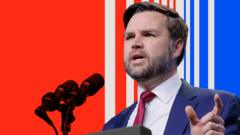
In a recent revelation of JD Vance's foreign policy approach, the vice-president's worldview challenges traditional diplomatic norms and shifts the conversation about America's role on the global stage. Following a heated confrontation in the White House regarding US aid to Ukraine, Vance's comments have sent ripples through international relations, particularly concerning European allies.Vance's first significant address at the Munich Security Conference this year raised eyebrows when he mainly criticized US allies, devoting scant attention to the existing conflict in Ukraine. His pointed remarks accused European leaders of being out of touch with their citizens and suggested a divergence from shared democratic values with the US. Emphasizing that American interests must come first, he distinguished between supporting individual freedoms and the realities faced by American workers left behind by globalization.The vice-president, often seen as a voice for Trumpism, unexpectedly escalated tensions with Ukrainian President Volodymyr Zelensky, chastising him for perceived ingratitude regarding US support. Observers noted that Vance's trajectory reflects an ideological evolution within the conservative movement that melds American nationalism with an examination of global power dynamics.With roots in Appalachia, Vance's personal narrative, along with his public rhetoric, centers on a sense of familial obligation over abstract ideals. He frames discussions around employment and international responsibilities through the lens of his constituents’ struggles, thus intertwining domestic issues with foreign policy.Political analysts describe Vance as pragmatic rather than strictly ideologically driven, indicating a nuanced consideration of what constitutes American interests. His previous opposition to Trump contrasts dramatically with his current alignment as vice-president where he appears committed to reinforcing a nationalistic agenda that prioritizes American citizens over international commitments, especially regarding Ukraine.This perspective, though resonating with certain voter segments, raises concerns about the implications of America's disengagement from traditional alliances. Critics argue that Vance's approach could undermine longstanding relationships essential for global stability, calling into question what America's leadership role will resemble, particularly in light of rising geopolitical tensions such as those presented by China.As the world watches Vance's evolving narrative unfold within the Trump administration, the discourse surrounding US foreign policy continues to be redefined, reflecting a significant shift to a more isolationist and inward-looking American approach. With his outspoken nature and willingness to confront both allies and enemies, Vance is proving to be a pivotal player in shaping the future of US diplomacy.