
In brief
Elon Musk has been named head of Donald Trump’s new Department of Government Efficiency, promising to cut wasteful spending and streamline federal operations. This role comes amid Musk's known advocacy for deregulation, reflective of his personal business interests, and signifies a potential shift in governmental policies impacting tech and industry.
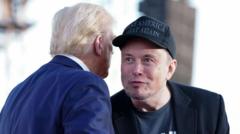
Elon Musk has been appointed to lead the newly formed Department of Government Efficiency (Doge) under President-elect Donald Trump. The announcement, made via social media, indicated Musk alongside former Republican presidential hopeful Vivek Ramaswamy would focus on eliminating bureaucratic obstacles, reducing unnecessary regulations, cutting expenditures, and reorganizing federal departments. This influential position is expected to allow Musk to shape government policies that resonate with his business ventures.Musk has long criticized federal spending, citing potential savings of at least $2 trillion in the government’s existing budget. His statements have included proposals to dramatically reduce the number of federal employees. Ramaswamy shares a vision of dissolving several federal entities, including the Department of Education and the IRS, furthering the deregulatory ambitions of the new administration.Musk’s management style, which he demonstrated during his acquisition of Twitter—now X—illustrates his approach to efficiency. After purchasing the platform for $44 billion, he implemented significant staffing cuts from 8,000 to 1,500 employees. Musk framed this decision as a means to keep the platform viable amid declining ad revenue exacerbated by relaxed content moderation policies.These transitions ignited controversy, with claims that they led to an increase in hate speech on the platform, a charge he contests by asserting his commitment to political neutrality. Musk's corporate maneuvers have garnered scrutiny, with political analysts observing his dual interests as both a government advisor and a billionaire business owner with extensive regulatory stakes.Critics suggest Musk’s push for a leaner federal government might also stem from grievances regarding the regulatory landscape affecting his enterprises, particularly in the automotive and aerospace industries. Musk has faced legal challenges related to unionization at Tesla and regulatory disclosures for SpaceX, leading to claims of government overreach. His advocacy for slashing red tape appears to directly benefit his array of companies.Despite these critiques, experts note Musk's beliefs resonate with a larger ideology advocating for reduced government intervention. His financial backing—reportedly $200 million—for Trump’s campaign underscores a transactionally beneficial relationship. This collaboration has translated into consultative access to Trump on varied policy areas, including the ongoing situation in Ukraine.While Musk cannot hold presidential office, he has positioned himself as a pivotal private sector influence on U.S. policy. His role in Trump’s government signals a unique intersection of business interests and political power, with potential implications for the future of American regulation and industry practices.

