
In brief
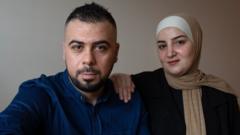
After the fall of Bashar al-Assad, Douna Haj Ahmed discovered the details of her husband Abdullah Al Nofal's harrowing detention at Al-Khatib prison, shedding light on the brutal realities faced by many Syrians during the civil war. With the help of citizen journalism, their story emphasizes the need for awareness of ongoing struggles in Syria.
Article text:In early December, Douna Haj Ahmed, a Syrian refugee based in London, was confronted with a shocking revelation about her husband, Abdullah Al Nofal's past. The couple was watching news footage of prisoners escaping Syria's brutal security regime when Abdullah muttered, "This is where I was arrested; this is the place.” For Douna, the tears flowed as she listened to her husband describe the torment he faced in the notorious Al-Khatib prison, which is often referred to as "Hell on Earth." Douna, whose brothers were also victims of detention during the protracted Syrian civil war, had always believed she knew the basics of Abdullah's suffering. However, it was in that moment that the depth of his trauma became painfully clear. "Abdullah does not like to share things emotionally; he likes to look strong," she recalled. "But seeing him cry was a turning point. I think he felt closure seeing that."Abdullah, now 36, faced a harrowing experience while working in Damascus during a tragic chapter of Syria's history. Stopped at a military checkpoint in July 2013 while employed by the International Committee of the Red Cross, he was arrested and taken on a journey through torment. With connections to the protests in Deraa that sparked the uprising against Assad, he laid low as the violence escalated, fearing for his life.During his three days in solitary confinement and subsequent transportation to Al-Khatib, Abdullah experienced a world of suffering. "It was completely dark. I remember hearing nothing; you feel so abandoned." When taken to a larger cell, he found himself among 130 fellow detainees, surrounded by horrific scenes of brutality and despair. Shahid from the Syrian Observatory for Human Rights estimates about 60,000 lives have been tortured or lost in detention facilities like Al-Khatib.Witnessing unspeakable horror, Abdullah recalled the relentless screams of others enduring torture and said about 20 fellow detainees perished due to illness and misery. "Every time they take someone for investigation, they come back almost unrecognizable,” he said. “If you weren’t tortured, it was just a matter of time."After 12 days of torment, Abdullah faced an interrogation where he was beaten and falsely accused of weapon smuggling. Fearing for his life, he constructed a false narrative to avoid further punishment. “Every minute it’s like you’re dying,” he confessed, portraying the constant fear that gripped him.His "luck" allowed him to be released after a month, leading to a new life in London, where he and Douna now share their harrowing narrative. With newfound freedom from the regime's grip, Abdullah felt emboldened to reveal his story. The couple recognizes the privilege of being able to speak out - a stark contrast to those who suffered and never had the chance to be heard.Amidst the tears, Douna expressed that every revelation from her husband about the Assad regime’s horrors contains unexpected depths of despair. “This regime always reaches a new level of brutality,” she lamented. “We are privileged to tell our stories. Many will never have that chance.” Their experience stands as a stark reminder of the everyday struggle facing countless Syrian refugees and the ongoing fight for justice amidst lingering despotic rule.


