In brief
As scientists and sailors monitor its movements, the impending arrival of iceberg A23a may disrupt the fragile ecosystem of the British territory.
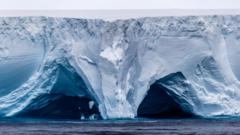
The world's largest iceberg, designated A23a, is currently on a trajectory that could lead to a collision with South Georgia, a remote British territory renowned for its rich wildlife. This towering iceberg, which originated from Antarctica and is now approximately 173 miles away, poses a significant threat to local penguin and seal populations as it grinds through the waters toward the island.A23a, which broke off from the Filchner Ice Shelf in Antarctica in 1986, had been trapped for years before finally breaking free last December. Its perilous journey has captured the attention of scientists, fishermen, and sailors who closely monitor satellite images to track its movements. The iceberg's arrival is a cause for concern, as past incidents have resulted in the deaths of countless seabirds and marine mammals that were unable to access feeding grounds blocked by ice.Simon Wallace, a sea captain aboard the South Georgia government vessel, described the risks posed by icebergs: "Icebergs are inherently dangerous... I would be extraordinarily happy if it just completely missed us." With its size estimated at around 3,500 square kilometers—approximately the area of Cornwall—A23a risks breaking apart and leaving large pieces drifting for years, similar to past icebergs that disrupted access to feeding grounds for wildlife.Historically, the region is known for such iceberg threats; in 2004, A38 grounded near South Georgia, leading to fatalities among seal pups and penguin chicks. Marine ecologist Mark Belchier acknowledged the challenges faced by both fisheries and wildlife in the area, stating that while impacts are common, the capacity to adapt remains strong.Concerns have also grown among sailors and fishermen, whose operations are increasingly hindered by the presence of icebergs. A76, another iceberg that emerged in 2023, caused alarm among local fishermen as it loomed near their fishing grounds. With the prevalence of such icebergs on the rise, navigation has become a significant concern for those who rely on these waters for their livelihood.The melting iceberg provides a unique opportunity for scientific exploration. Research teams aboard the British Antarctic Survey's research vessel, Sir David Attenborough, have begun studying the effects that melting icebergs have on local ecosystems. The runoff from these icebergs releases various nutrients and chemicals into the surrounding waters, which could alter the ocean's physics and chemistry, potentially influencing the region's carbon cycle.As iceberg A23a continues its journey toward South Georgia, its unpredictable path remains a source of concern for both wildlife populations and human activities in the region.