
In brief
As Moldova embarks on a journey towards European integration, it seeks to reshape its political and economic landscape to overcome past struggles.
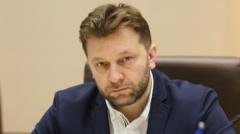
Moldova is intensifying its efforts to become an attractive destination for foreign businesses as it seeks to overcome past political uncertainties. Dutch entrepreneur Luc Vocks, who established his company DevelopmentAid in the Moldovan capital of Chisinau, reflects on his journey, stating, "I went with a backpack and set up a business" after first visiting Moldova in 2004. He notes significant improvements in the country's business environment since he arrived in 2007.The Moldovan government is aiming to draw more foreign investors by offering enticing low corporate tax rates. The standard corporation tax stands at just 12%, significantly lower than the rates in countries like the UK and Netherlands. Additionally, their innovative Moldova IT Park (MITP), launched in 2018, offers an even sweeter deal for tech firms, with a mere 7% corporate tax and no employee income tax, making it highly appealing for new enterprises.The pro-EU government, led by President Maia Sandu, who was recently re-elected, is determined to modernize the economy in preparation for aspiring EU membership by 2030. Recent constitutional changes backing EU integration won a narrow victory in the polls, despite allegations of external interference.Moldova's deputy prime minister Dumitru Alaiba expressed optimism about the country's rapid evolution, emphasizing that the nation is shedding its previously corrupt image. He pointed to improvements in the global Corruption Perceptions Index, where Moldova has advanced from 91st to 76th position. This progress allows entrepreneurs like Vocks to operate without the bureaucratic hurdles he previously faced.The MITP initiative is achieving substantial success, with over 2,000 registered companies, including 300 from overseas, generating approximately €365 million in revenue in the first half of 2024 alone. However, the influx of foreign tech firms poses challenges for local businesses when it comes to competitive salaries. German entrepreneur Sven Wiese notes that while the salaries offered have increased significantly, many skilled Moldovan workers still consider emigration.Despite geopolitical tensions, notably the war in neighboring Ukraine, Alaiba remains confident in Moldova's stability, provided international support for Ukraine continues. As the country strives to position itself as a regional business hub, local experts foresee significant growth potential in the Moldovan market.



